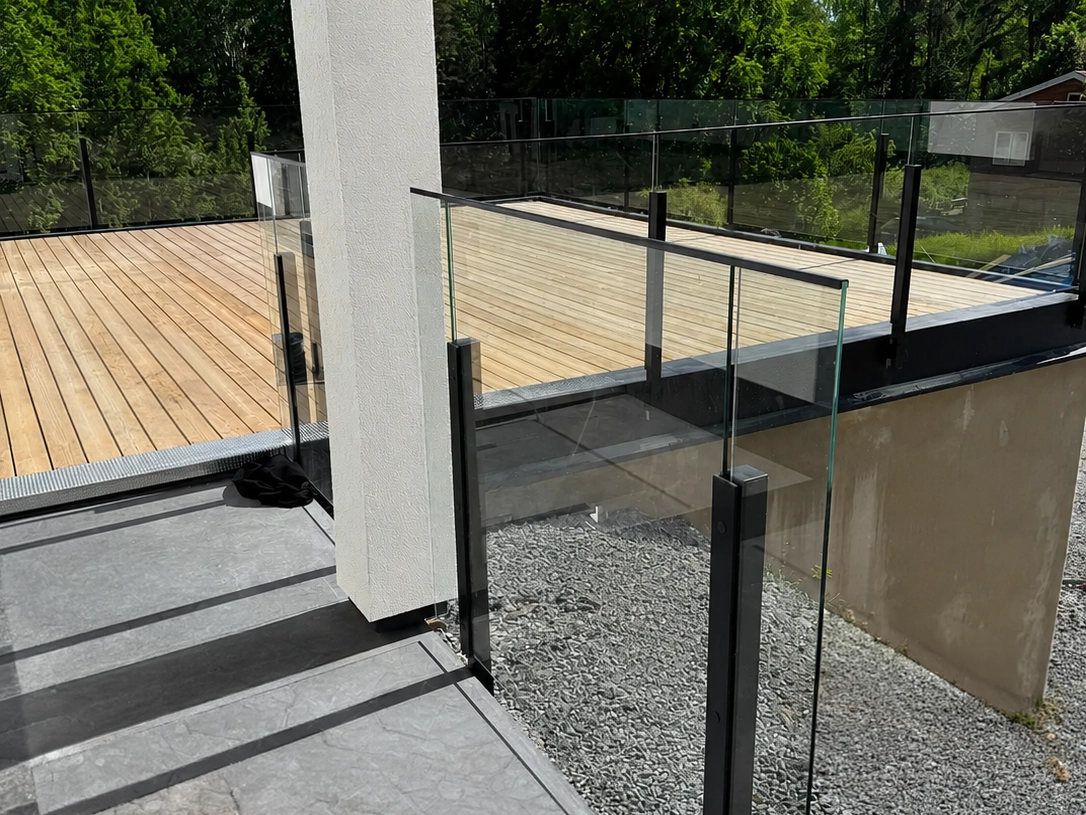
A child-safe railing should do more than just mark an edge. It should reduce the risk of falls, climbing, and children getting stuck in openings.
That is why railings need to be designed with the child’s perspective in mind. What looks safe to an adult may still encourage climbing, especially on patios, stairs, balconies, and lofts.
In this guide, we’ll go over what you should consider when choosing a child-safe railing: openings, height, materials, the risk of climbing, and which solutions work best in different areas of the home.
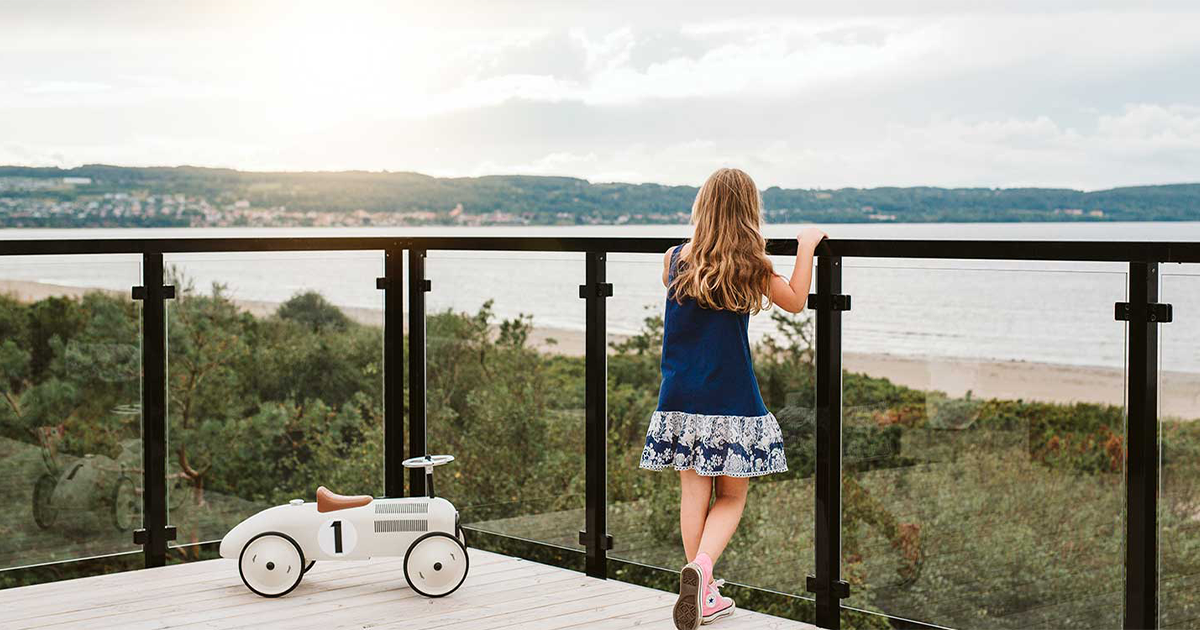
What makes a railing child-safe?
A child-safe railing is primarily about three things: ensuring that children cannot fall through, ensuring that the railing does not encourage climbing, and ensuring that the safety feature is adapted to the fall risk at that location.
Small openings
The openings in the railing should be small enough that young children cannot squeeze through or get stuck.
Not suitable for climbing
Avoid horizontal parts, wires, or features that could serve as steps in areas where children frequently play.
The Right Height for the Location
The height should always be determined based on the difference in level, the intended use, and the placement of the railing.
Look at the railing from a child's perspective. What looks secure to an adult may still have details that a child could climb on, crawl through, or get stuck in.
Rules and measurements to keep in mind
When we talk about child-safe railings, it’s all about how the railing is designed: small openings, the right height, and features that don’t encourage climbing. In areas where young children may be present, there are clear guidelines to follow.
| Measurements or requirements | What that means | Where is it most noticeable? |
|---|---|---|
| Max 100 mm | Vertical openings must be small enough that young children cannot fall through the guard. | Patio railings, balcony railings, and stair railings. |
| Max 50 mm | The clearance between the bottom edge of the balcony railing and the balcony floor, or between the bottom edge of the stair railing and the bottom of the step, should be kept minimal. | Balconies and staircases with openings at the bottom. |
| Maximum 100 mm at the landing | The vertical clearance between the bottom edge of the stair railing and the stair tread or floor must also be limited. | Stairs, landings, and loft connections. |
| Prevent Climbing | At least 0.8 meters of the guardrail's height must be designed so that it does not encourage climbing. | Railings where children can use the crossbars, struts, or nearby objects as steps. |
| Avoid 110–230 mm | There should be no horizontal openings within that range above the front of the guard. | Railings with crossbars, gaps, or open sections. |
| Height Based on Risk | The height of the railing should be determined based on the fall height, intended use, and the layout of the location. | Patios, lofts, balconies, and other changes in level. |
Also keep in mind objects located near the railing. Planters, furniture, and fixed installations can make an otherwise safe railing easier to climb. Read more at the Swedish National Board of Housing, Building, and Planning (Boverket) about railings and handrails .
Railings Suitable for Families with Children
A child-safe railing doesn't have to feel heavy or confining. The right solution can provide safety, light, and a look that complements both your home and your everyday life.
Safe, sturdy, and hard to climb on
The most important thing is that the railing does not have any openings that children can squeeze through, and that its design does not allow it to be used as a ladder.
For this reason, glass, vertical bars, or other solid solutions are often a better choice than railings with horizontal bars in environments where small children are frequently present.
- Glass railing
- Provides unbroken protection without any gaps that can be climbed through. Ideal for patios, balconies, and lofts where you want to maintain natural light and a view.
- Aluminum
- An easy-to-maintain and stylish choice when you want a sleek glass railing.
- Stainless steel railing
- Ideal for situations where the railing needs to feel sturdy yet still clean and modern. Choose a design with child-safe openings.
- Wrought-iron railing
- May be suitable for older houses and entryways, but should have vertical elements and be designed without features that encourage climbing.
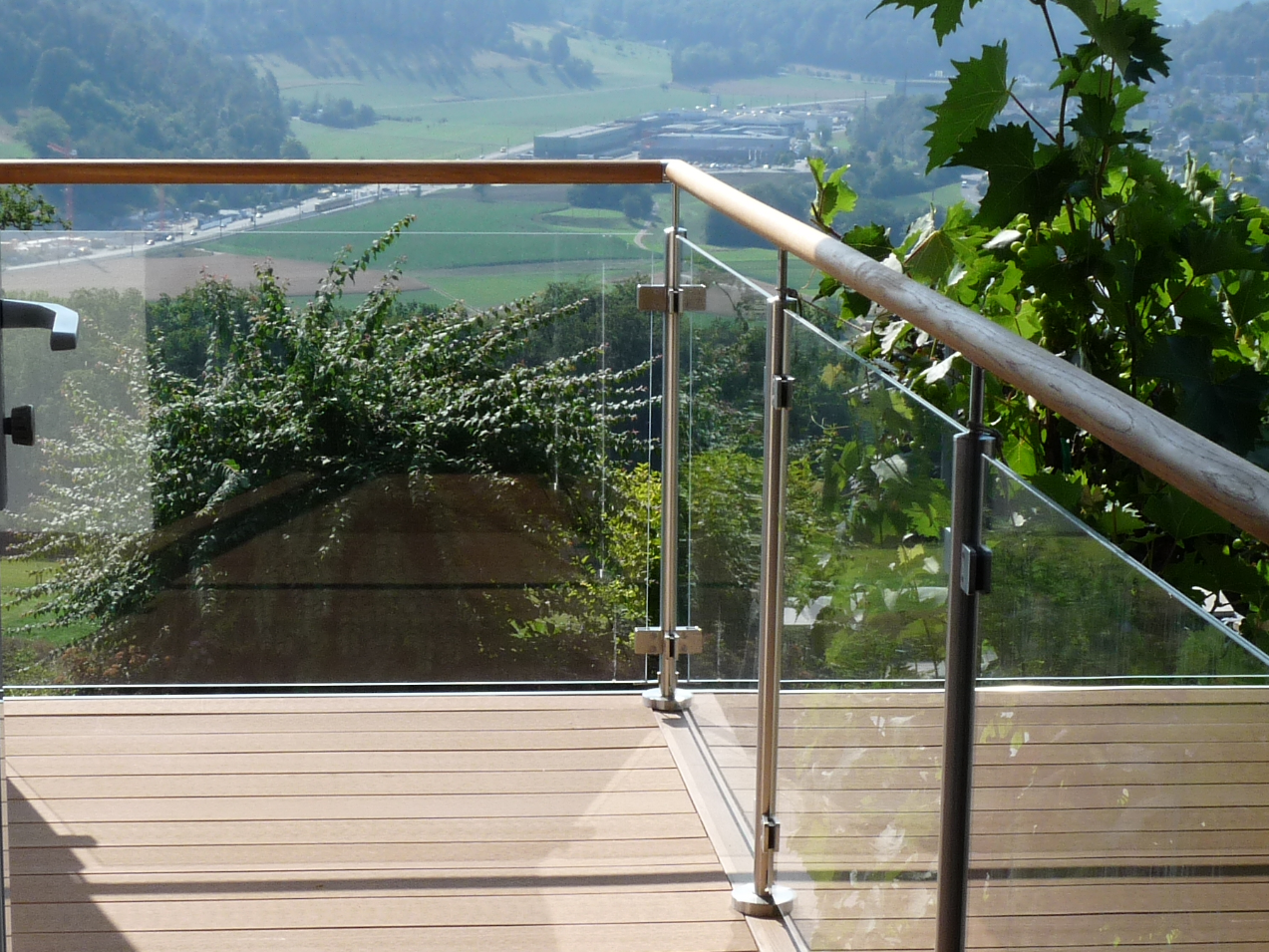
Safe without blocking the view
A common mistake is to assume that a child-safe railing must be heavy, solid, and visually dominant.
In many settings, however, a solution that provides unbroken protection while still allowing light and visibility to pass through is actually better. Glass railings can therefore be a good fit for patios, balconies, and lofts where you want to create a sense of security without enclosing the space.
The important thing is that the railing has no parts that can be climbed on, no large openings, and no weak spots at the bottom, corners, or fastenings.
Even a good railing can become less safe if furniture, pots, or boxes are placed next to it, making it easier to climb.
Child Safety in Different Locations
The same railing doesn't always work equally well everywhere. A balcony, a staircase, and a loft each present different risks, so the solution should be tailored to how the space is used.
Protect without confining
Here, the risk of falling is often the most important consideration. Choose a railing with small openings and avoid features that children could use as steps.
Glass railings or vertical elements often work well when you want to preserve natural light and views.
Keep both the railing and the gate in mind
On a staircase, the child must be prevented from getting out onto the stairs, but the railing must also be difficult to climb.
Safety gates at the top and bottom can be important, especially when the child is small.
Pay special attention to height and openings
In a loft, the difference in levels is obvious, and the railing can encourage play, climbing, or hanging.
Choose a solution that feels enclosed, stable, and difficult to climb on, even as your child gets bigger.
Check the area from the child's height. Are there any pieces of furniture, flower boxes, trellises, or other objects near the railing that make it easier to climb?
Avoid solutions that are easy to climb
Children use railings differently than adults. A rail, a wire, a window box, or a piece of furniture near the railing can quickly become a step to climb on.
That's why you shouldn't just think of the railing as a safety feature, but consider the entire surrounding environment as well.
- Horizontal slats, rails, or cables in areas where young children are often present.
- Openings that children might try to crawl through or get stuck in.
- Furniture, pots, boxes, or fixed fixtures placed next to the railing.
- Glass railings or other solutions that provide unbroken protection.
- Vertical sections spaced at small, even intervals.
- A railing in which the bottom edge, corners, and mounting have been carefully designed from the start.
A railing may work well on a patio where adults spend time, but may be less suitable in an area where small children play. Always evaluate the solution based on how the space is used.
Important Information Before You Order
When choosing a railing for a family with children, you need to consider more than just dimensions and materials. Also check for openings, the risk of climbing, and how the area around the railing is used.
Measure height and elevation difference
Start by determining where the railing will be installed and how high the drop is. On stairs, measure from the front edge of the step, not from the floor next to it.
Check all openings
Check the spacing between vertical sections, the bottom edge, corners, and joints. It's often small gaps that cause problems in everyday use.
Avoid features that can be climbed on
Avoid solutions that include horizontal parts, wires, or components that could be used as steps in areas where small children are often present.
Be mindful of furniture and objects near the railing
A chair, pot, box, or flower box next to the railing can make it easier to climb. Plan the area around the railing from the very beginning.
Choose a railing that will stand the test of time
Children grow quickly and explore their surroundings in new ways. Therefore, choose a solution that feels safe even as your child gets bigger and more active.
Do you want to create a safer environment at home?
Choose a railing based on the fall risk at the location, the child’s movement patterns, and how the space is used in everyday life. We’ll help you find a solution that feels safe without compromising on style.
Frequently Asked Questions About Child-Safe Railings
Here, we answer common questions about openings, climbing hazards, glass railings, cable railings, and what you should keep in mind regarding balconies, stairs, and lofts.
What is a child-safe railing?
A child-safe railing is a railing that reduces the risk of falls, climbing, and getting trapped. It should have small openings, be difficult to climb, and be designed to address the specific fall risk at that location.
How large can the openings be in a child-safe railing?
In areas where young children may be present, vertical openings must not exceed 100 mm in width. There are also specific dimensions for openings at the bottom edge, on landings, and on stair treads.
Learn more at the Swedish National Board of Housing, Building and Planning about railings and handrails .
Are glass railings a good choice for families with children?
Yes, glass railings can be a good choice because they provide unbroken protection without horizontal bars that might encourage climbing. They’re often a good fit for patios, balconies, and lofts where you want to preserve natural light and the view.
Are wire railings child-safe?
Wire railings aren’t always the best choice in areas where small children are often present, since horizontal lines can make it easy for them to climb. In areas with children, you should pay extra attention to openings, height, and whether the structure can be used as a step.
Does a railing need to be taller if children are around?
The height of the railing should be determined based on the fall height, the use of the area, and the design of the surface. In areas where children are frequently present, it is especially important to consider height, openings, and the risk of climbing.
What should I keep in mind when it comes to stairs or a loft?
Near stairs and lofts, it is important that the railing provides protection all the way along, that openings are not too large, and that the child cannot use the railing as a ladder. Safety gates may also be needed near stairs when the child is young.