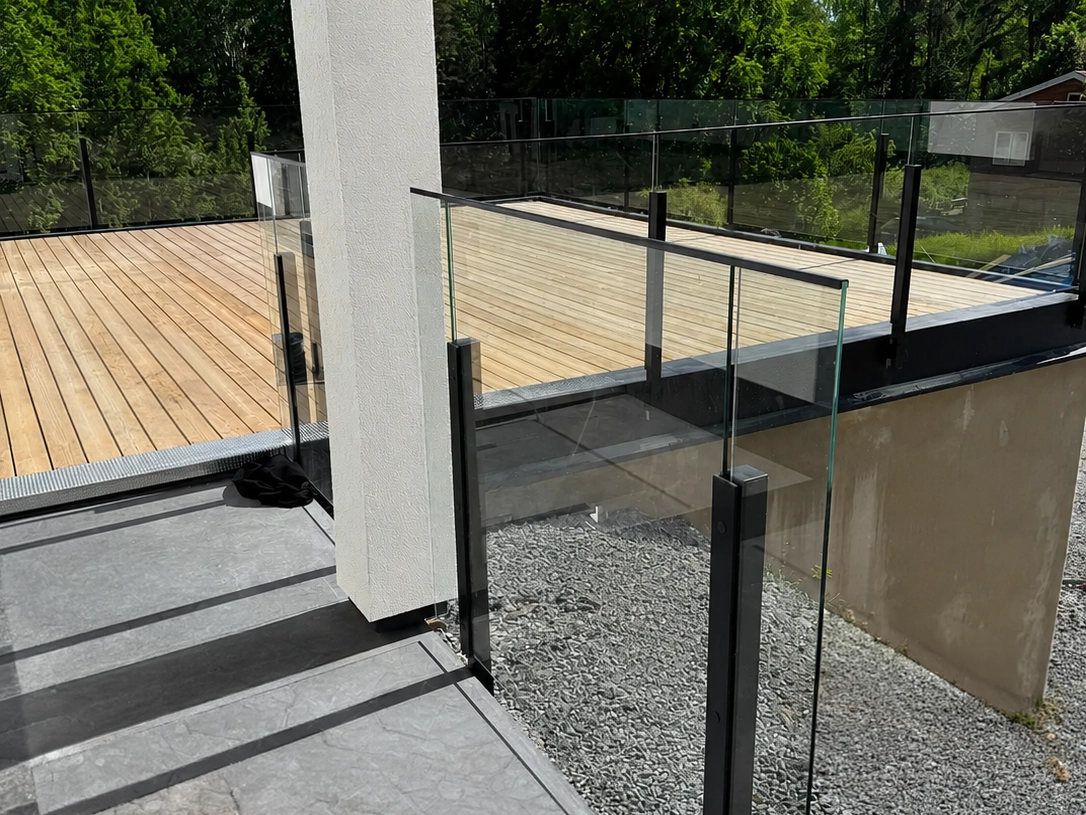
Why combine wood and metal in a railing?
Combining wood and metal in a railing is an effective way to create contrast—both visually and functionally. Wood provides a warm, natural feel, while metal offers stability, structural strength, and durability. This combination is particularly popular for patios, stairs, balconies, and indoor spaces where both aesthetics and strength are important.
Common examples:
- Wooden handrail mounted on top of a stainless steel railing
- Metal posts with wooden slats or wooden panels
- Glass railing with wooden crossbars or wooden posts
No matter which solution you choose, the combination creates a personal and timeless look—tailored to the space and style.
Advantages of Wood and Metal in Railings
Choosing a wooden and metal railing has several clear advantages:
- Aesthetics: The wood's texture and color bring the metal's clean lines to life
- Comfort: A wooden handle feels warm and easy to grip all year round
- Flexibility: You can customize the color, wood type, and fasteners
- Strength: The metal construction provides stability and long-lasting durability
- Installation: Modern systems are designed to easily combine materials
This combination works just as well in modern single-family homes as it does in classic wooden houses or public spaces.
What should you keep in mind when combining them?
Wood and metal are two different materials—and that places certain demands on design and maintenance:
Movement Due to Temperature Changes
Wood swells and shrinks more than metal when exposed to moisture and heat. Use sliding fasteners where necessary—especially outdoors.
Risk of Corrosion
Damp wood can cause galvanic corrosion if it comes into direct contact with metal. Use insulating washers and choose stainless steel with a AISI 316L in harsh environments.
Maintenance Needs
Wood requires regular cleaning, oiling, or varnishing—while metal is generally maintenance-free. Choose a type of wood and finish that suits your level of commitment.
Color and Patina
Keep in mind that wood changes over time. Oak turns grayer when used outdoors, while oiled woods retain their luster better. Combine with colored posts or clamps to create a cohesive look.
Design Examples – Wood and Metal in Various Settings
The combination of wood and metal can be adapted to many types of spaces:
- Staircase with steel and wood handrail: An oak handrail mounted on brushed steel tubes creates a clean, easy-to-grip look
- Aluminum balcony railing with wooden crossbars: Soft lines and a warm feel without compromising on strength
- Railing with wooden posts and metal fasteners: Ideal for spaces where you want to maintain a classic look with modern details
- Wood and Glass Railing: An ash handrail mounted on top of a glass railing provides a sense of space, openness, and safety in a
The style can be customized with wood types such as oak, walnut, ash, or teak, as well as with powder-coated metal components in any color of your choice.