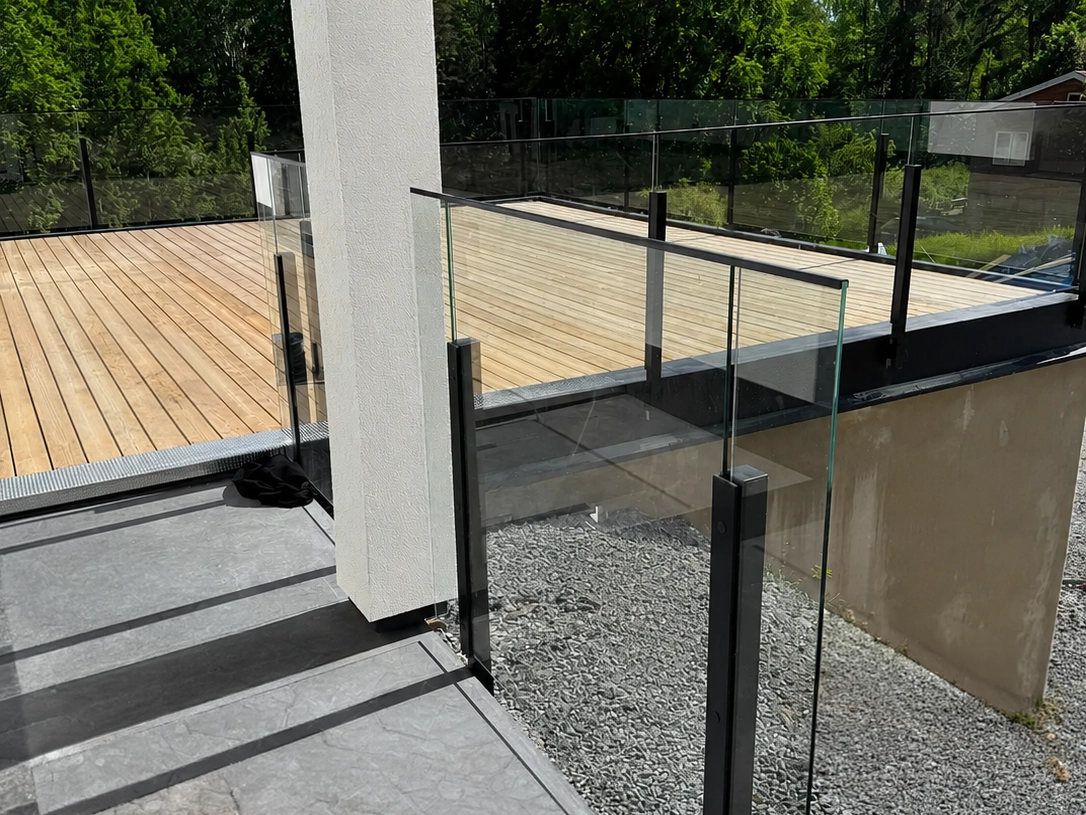
This project features a stainless steel cable railing installed along an outdoor staircase and continuing up to an upper terrace. The railing follows the changes in level with a subtle line and is anchored directly into the masonry structure. What sets this installation apart from a standard solution is the wooden handrail on top—a warm touch that softens the transition between stone and metal.
When Materials Come Together
A stone setting—whether a masonry facade, a paved patio, or natural stone blocks—provides an architectural foundation that is solid, durable, and visually substantial. A railing intended for such a setting must consciously address this contrast, either by blending in (stainless steel against gray stone) or by introducing a different material that softens the overall look.
Here, the woodwork instructor does the latter. It’s the same principle as when an architect places a wooden bench in a concrete plaza—the organic material adds a human touch to an otherwise harsh environment. On the railing, wood also serves a practical purpose: your hand touches a softer, warmer material than cold steel, which is especially welcome in the winter.
The railing's construction—stainless steel posts, horizontal wires, wooden handrails
The railing consists of three parts, each of which contributes:
- Slim stainless steel posts made of AISI 316 provide the vertical structure without being overpowering. The acid-resistant steel withstands outdoor conditions without corroding.
- Horizontal wires automatically follow the slope of the stairs, forming parallel lines that run along with the movement of the stairs. There are no vertical rails to interrupt the flow.
- Jatoba wood handrails provide a warm feel and finish. A hardwood like Jatoba can withstand outdoor conditions without rotting and develops a soft gray patina over the years.
Handrail Mounted to a Wall – Technical Considerations
Anchoring a railing to a masonry structure requires special planning. Three things need to be right:
- Sufficiently deep anchorage. The screws must penetrate intact stone or mortar, not just the surface. In older walls, test drilling may be necessary to locate solid sections.
- The right expansion screw. A stone wall requires expansion screws rated for the material’s load-bearing capacity—not standard wood screws.
- Consideration of the wall’s natural movement. Stone structures move minimally in response to temperature changes. The fastenings must allow for this movement without causing cracks in the wall.
We’re happy to provide guidance on installation if you’re unsure—please contact us before ordering if the surface is unusual.
The Swedish National Board of Housing, Building, and Planning's requirements for outdoor stairs
For outdoor staircases, according to the Swedish National Board of Housing, Building, and Planning’s building codes, the handrail must be installed at a height of approximately 900 mm from the front edge of the step, be easy to grip (30–50 mm in diameter), and extend at least 300 mm beyond the top and bottom steps. A hardwood handrail meets these requirements and also features the classic grip size that fits most hands.
Outdoor wooden handrails should be made of a durable hardwood such as jatoba. Softwoods like pine or spruce will not last over time without being oiled. Jatoba develops a soft gray patina over the years without losing its functionality or strength, allowing the railing to age beautifully without ongoing maintenance.
Three Questions to Consider Before Installing a Railing in a Stone Setting
- Is the wall intact and load-bearing where the railing will be installed? A test drill can provide the answer if you're unsure. We recommend contacting our customer service for guidance on more complex surfaces.
- Which type of wood is best? Jatoba is our most common choice for outdoor use. Other hardwoods also work, depending on the desired shade.
- How long is the entire run? The railing is delivered in sections that are joined during installation—measure the entire length from the start of the stairs to the end of the deck.
The combination of stone, metal, and wood—three materials working in harmony
It’s not uncommon for the most beautiful architectural designs to combine several materials, each contributing its own unique qualities. This is clearly evident in this project: the stone wall provides the foundation and a sense of history, the stainless steel adds a technical and modern element, and the oak or hardwood brings warmth and a tactile quality where the hand actually touches the railing.
It’s a principle that architects often describe as a “dialogue between materials”—no single element dominates, but each contributes its own specific quality. This works particularly well on an outdoor staircase because the user physically interacts with the staircase—you see the stone beneath your feet, your gaze meets the metal railing, and your hand grasps the wooden handrail.
Staircase Renovation with a New Handrail – Frequently Asked Questions
Can a new railing be installed on an old wall?
Yes, usually. A well-built wall made of natural stone or brick will typically support railing anchors for many decades. For older or more porous walls, we recommend test drilling before placing an order so we can be sure the anchor points are solid.
How long does the wooden wristband last?
Hardwoods like Jatoba typically last for many years outdoors without regular maintenance. Wood that is treated with oil once a year retains its original color longer; otherwise, it develops a soft gray patina that many people actually prefer aesthetically.
Find the right details for your project
Explore our selection of wire railings, handrails, and stair railings. We have the solutions to create a safe and stylish environment, whether indoors or outdoors.