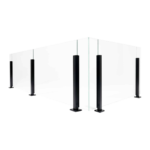
The surface of the glass determines the feel of the space. The same railing can provide an unobstructed view, filtered sunlight, or complete privacy, depending on the type of glass used in it.
The choice, therefore, isn't about which glass is best, but about what you want the railing to do. Do you want to be seen, avoid being seen, or block the afternoon sun?
In this article, we compare the four most common glass finishes and show when it’s a good idea to combine several of them in the same railing.
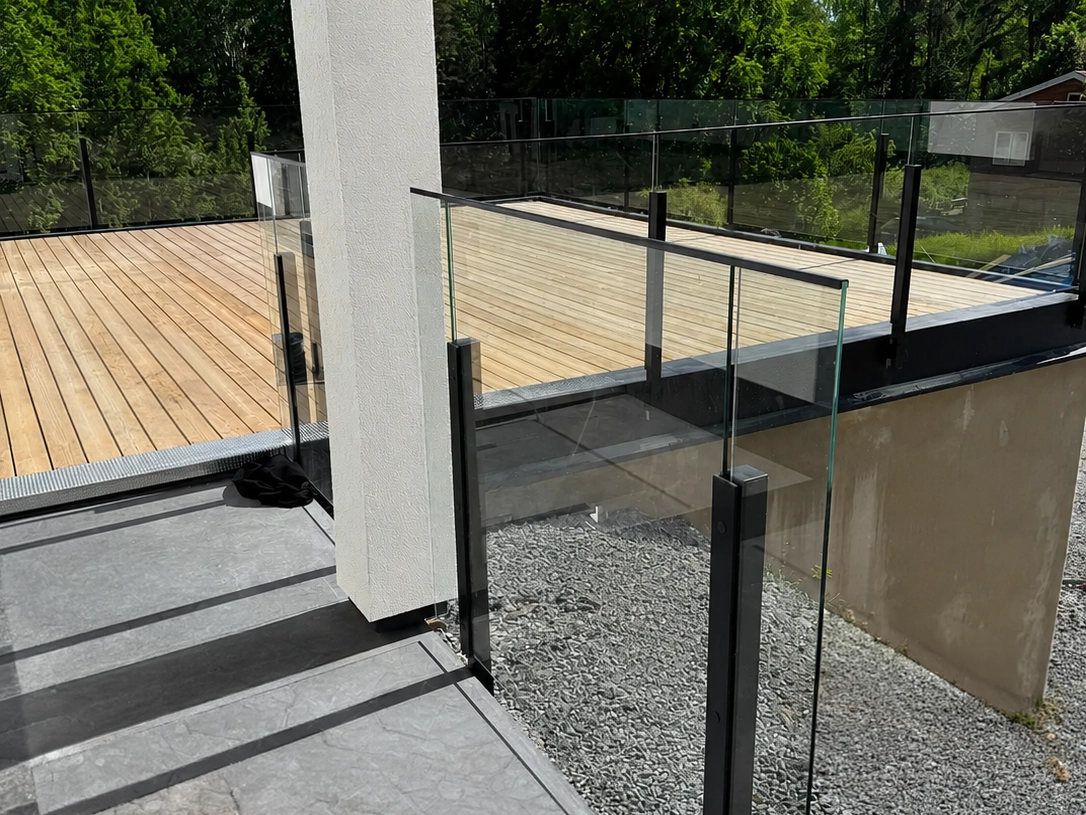
Clear, frosted, tinted, or smoked?
Glass surfaces differ primarily in how much light and visibility they allow through. The table provides a quick overview before you compare the options in more detail.
| Glass surface | Light | Transparency | Expressions | Best for |
|---|---|---|---|---|
| Clear glass | Maximum | Complete transparency | Airy and understated | Views and Small Spaces |
| Frosted, opal | Diffuse | No transparency | Calm and gentle | Balcony in a densely populated area |
| Tinted, gray, or bronze | Muted | Partially | Understated and exclusive | South-facing with plenty of sun |
| Smoke-colored | Darker | Partially | Modern and graphic | Black posts and post-free |
Clear glass is the most common choice and the one that blurs the line between outdoors and indoors. On a small balcony or in a narrow garden, it makes the biggest difference, since the space feels larger when the eye can continue to see into the distance.
Frosted glass, often called opal glass, completely obscures the view but lets light through. It is the only option when privacy is the main goal.
Smoke-stained is a darker version of stained wood that has become common in modern railing designs, especially when paired with black posts or in post-free designs.
Tinted glass falls somewhere in between. It reduces both visibility from the outside and sunlight, and gives the railing a more pronounced visual presence.
Ultra-clear glass—when the green tint is distracting
Standard float glass has a faint green tint caused by iron oxide in the raw material. It’s barely noticeable on a single pane, but in a railing, you can see the glass from the edge, and there the tint becomes more apparent.
A faintly greenish edge
The glass surface looks clear from the front, but the natural green tint becomes visible along the edge. The thicker the glass, the more clearly the color can be seen.
A more neutral and colorless edge
Ultra-clear glass has a lower iron content and therefore significantly less green tint. The difference is most noticeable in thick glass and in post-free railing where the edge is exposed.
Combine multiple types of glass in the same railing
You don't have to choose a single type of glass for the entire length. On the contrary, dividing the space into zones is often both more attractive and more practical.
Clear View
Where you want the eye to continue looking out—toward the garden, the lake, or the landscape.
A Feud with the Neighbor
Where the view is actually a nuisance. Often, one or two sections are enough instead of frosted glass along the entire length of the railing.
South-facing, shaded
Where the afternoon sun gets too strong and is blinding when you're sitting down.
Frosty at the bottom, clear at the top
Provides privacy at seating height while preserving the view, the sky, and the light above.
Since the posts and fasteners are the same regardless of the glass surface area, the design remains consistent even when the infill varies. It is this same principle that allows the pool, deck, and stairs to be integrated into a cohesive system.

Light and warmth behind the glass
The glass surface affects the microclimate of the patio, not just its appearance. The difference is most noticeable in sunny locations and during the warmer months of the year.
Most solar heat
Clear glass facing south lets in the sun's heat and can create a greenhouse effect. It's pleasant in the spring and fall but is clearly noticeable in the middle of summer.
Reduces light and heat
Tinted glass reduces both light and heat, and therefore serves as a simple form of sun protection when the patio faces a sunny direction.
Spreads the light
Frosted glass diffuses light rather than blocking it out. That’s why a balcony with a frosted railing rarely feels dark, even though the view is completely blocked.
How to Choose—Step by Step
Start by considering the practical needs of the space, and then choose the glass surface for each section of the railing. That way, you won’t let a single problem dictate the entire length of the railing.
-
Decide what bothers you the most
Determine whether it is primarily visibility, strong sunlight, or neither that affects the location. This provides a clear starting point for choosing the glass.
-
Identify the source of the transparency
Walk around the property or balcony and check the lines of sight from the places where people actually walk by, sit, or spend time.
-
Select glass surface area by section
Use clear, frosted, or tinted glass where each function is needed, rather than letting the same type of glass dominate the entire space.
-
Take the cardinal direction into account
If the railing faces south, tinted glass can block the strong afternoon sun. In less sunny locations, clear glass can let in more light.
-
Consider ultra-clear glass
This makes the greatest visual difference in post-free railings, in thicker glass, and where the edge of the glass stands out clearly against a light-colored facade.
-
Check the drop height
The drop height determines the type of safety design, glass thickness, and mounting required, regardless of which glass surface you choose.
Not sure which glass surface is right for you?
Start by determining whether visibility or sunlight is the issue. Customer Service will help you choose glass options and combinations before you place your order.
Frequently Asked Questions About Clear, Frosted, and Tinted Glass
Which type of glass offers the best privacy?
Frosted glass, also known as opal glass. It completely obscures the view but allows light to pass through, unlike a solid plank.
Does it get dark behind frosted glass?
No. Frosted glass diffuses light rather than blocking it, so the surface rarely appears dark even though visibility is blocked.
What is the difference between tinted and smoked glass?
Smoke-tinted is a darker version of tinted. Both block out the sun and reduce visibility from the outside, but smoke-tinted creates a graphic look that is often combined with black window frames.
What is ultra-clear glass?
Glass with a lower iron content, which eliminates the faint greenish tint typical of standard float glass. The difference is most noticeable in thick glass and where the edge is exposed.
Can I mix different types of glass in the same railing?
Yes, and that's often the best choice. The posts and fasteners are the same, so the design remains consistent even when the infill varies by section.
Does it get hot behind a south-facing glass railing?
Clear glass lets in the sun's heat and can create a greenhouse effect. Tinted glass reduces this effect and acts as a simple form of sun protection.
Is frosted glass just as safe as clear glass?
Yes. All surfaces are available in safety glass. It is the drop height that determines whether the glass needs to be tempered, laminated, or both.