A picket fence is almost always judged by its pickets: the type of wood, the color, and the spacing.
But what determines whether the fence will still look good in ten years isn't the slats. It's whether the posts are still standing straight.
It's the frame that matters, not the slats
Wooden posts are subject to movement. They twist, develop cracks in the end grain, and lose their vertical alignment with the changing seasons, especially those that are embedded in the ground.
The posts serve the same purpose regardless of the material: to support the rails and keep the fence line straight. The difference lies in how wood and aluminum are affected by moisture and seasonal changes over time.
May change over time
Moisture and seasonal changes can cause wooden posts to warp and gradually become misaligned. A slight deviation in a single post is hard to notice, but when several posts are at different angles, the straight line along the top of the fence is disrupted.
Less susceptible to moisture
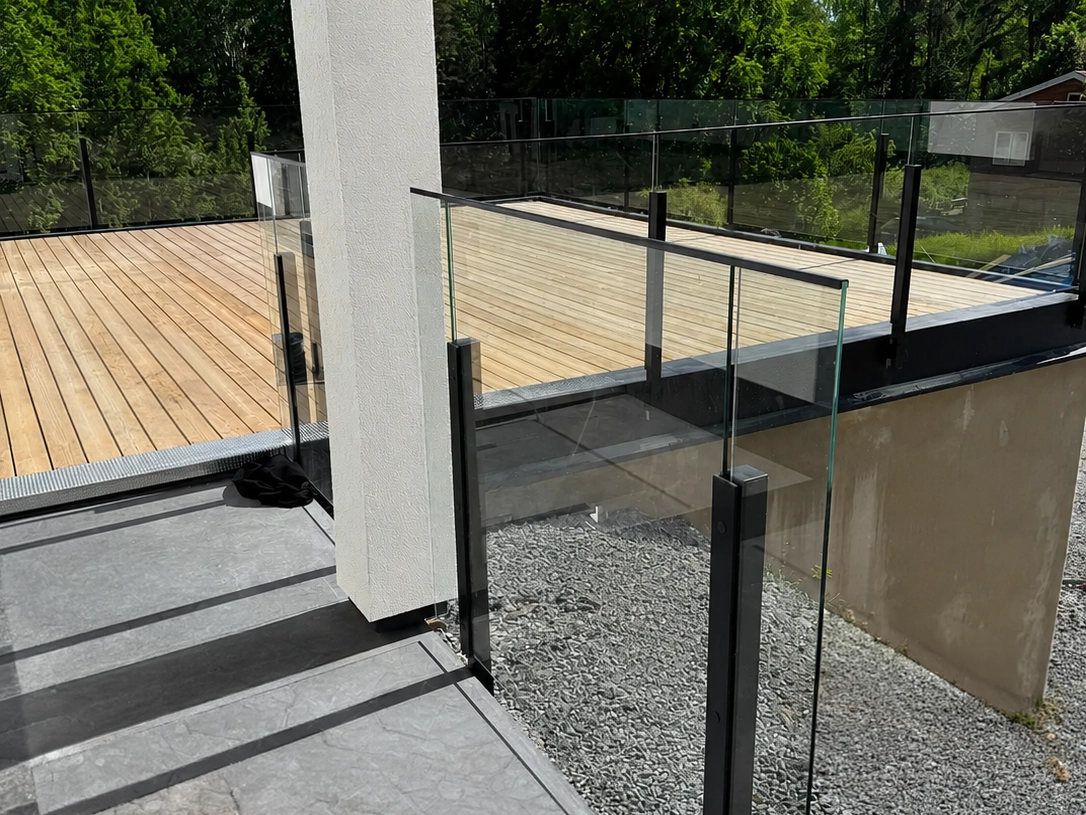
Verto uses powder-coated aluminum posts. Aluminum does not absorb moisture in the same way as wood, which reduces the risk of the posts warping or becoming misaligned as the seasons change.
The rib positions have already been determined
The posts come with pre-drilled holes for the rails, which means you don’t have to measure and mark the position of each individual rail. This is also the step where hand-built fences most often end up uneven—an error of just a couple of millimeters per rail becomes noticeable over the course of twenty rails.
Installation Dimensions
| This applies to | The Verto System |
|---|---|
| Recommended post spacing | 1,400–1,650 mm |
| Number of levels in the system | 14 |
| Types of Posts | Edges, Seams, and Corners |
| Anchoring in Concrete | Expansion Bolt |
| Mounting on a wooden deck | Custom Wood Screw for a Support Beam |
| Slats | Selected and purchased separately |
Greater distances with the aluminum profile
The spacing between posts is greater than on a traditional wooden picket fence, since the aluminum profile is stiffer than a wooden post of the same dimensions.
The Right Post in the Right Place
- Edge
- Upon completion
- Cormorant
- In a straight line
- Corner
- In angles
Horizontal Bars and Child Safety
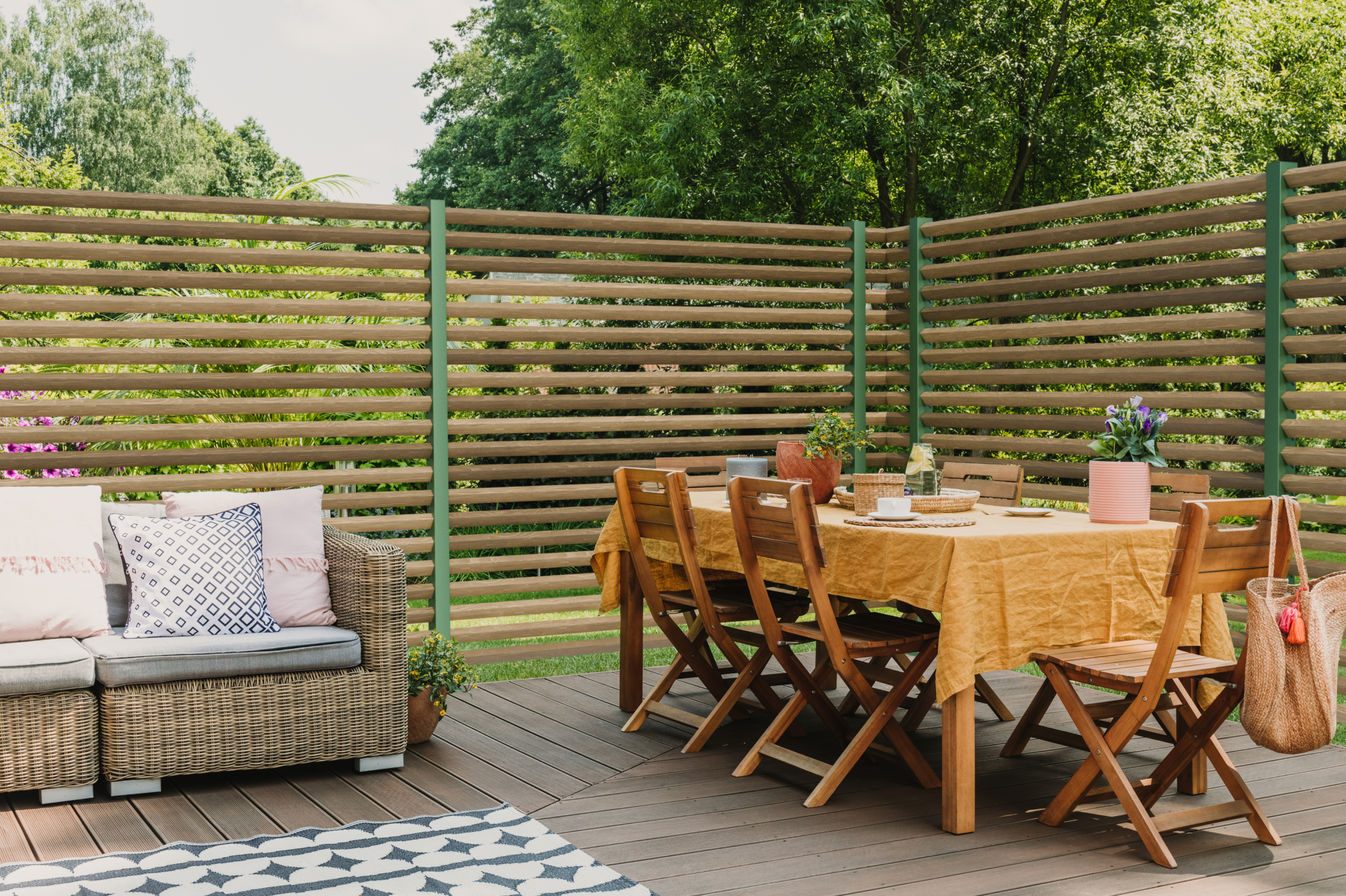
Horizontal slats are the most common choice, and the horizontal lines make the fence appear as an extension of the house's architecture.
Horizontal slats then become a safety issue
If the fence is located at the edge of, for example, a raised deck and is intended to prevent falls, special requirements apply in areas where young children may be present.
- 0,8 m
-
Prevent Climbing
The lower part of the guard must be designed so that it does not encourage climbing.
- 100 mm
-
Vertical openings
Vertical openings in the guard may be no more than 100 millimeters wide.
- 110–230 mm
-
Avoid this range
There should be no horizontal openings above the front of the guard within this size range.
The Material
The frame is made of powder-coated aluminum, while the slats are selected separately. This allows the design to remain consistent while letting the type of wood determine the fence’s overall look.
Powder-coated aluminum
Aluminum does not absorb moisture in the same way as wood and is therefore not affected by seasonal changes in the same way. The powder-coated finish provides the posts with a smooth and durable surface suitable for outdoor use.
You choose the type of wood yourself
Larch, cedar, and pressure-treated wood are all suitable. The slats are the element that primarily determines the fence’s color, texture, and character.
The material samples show approximate wood tones. Color and texture vary naturally from board to board and change over time.
Maintenance: The aluminum posts usually only need to be cleaned or hosed down when they get dirty.
Building Permit
A standard fence does not require a building permit. However, if a picket fence is dense and clearly acts as a barrier, the structure may instead be classified as a board fence. This is determined through a comprehensive assessment of, among other things, the design, function, and impact on the surrounding area—with visibility being one of the factors.
Open and Transparent
A standard fence is usually lower and less dense than a picket fence. The gaps between the boards mean that the structure still feels open rather than like a screening wall.
Tighter and more shielding
If the slats are closely spaced and the structure clearly serves as a screen, it can be classified as a fence. In that case, you’ll need to proceed and check its height and placement.
Two height limits within the zoning plan
Under the zoning plan, a building permit is required for fences when any of the following combinations of height and location are exceeded.
Here's how to do it—step by step
Start by determining the length and the placement of the posts. Once the outer points are established, it will be easier to divide the sections, choose the right fasteners, and install the slats evenly.
-
Measure the distance and count the sections
Measure the total length where the fence will be installed and figure out how many sections are needed.
-
Choose the Right Height
Adjust the height based on what you want to screen from view and how the fence will be used on the property.
-
Place the edge and corner posts first
Start with the ends and corners of the fence. These fixed points determine the alignment for the rest of the structure.
-
Space the joint posts evenly
Place the joint posts at the recommended spacing of 1,400–1,650 millimeters.
-
Choose the mounting method based on the surface
Use an expansion bolt when securing the post to concrete, or a suitable wood screw when mounting the post to a wooden support beam.
-
Check the load-bearing capacity
Make sure that the surface where the posts are to be attached is sufficiently load-bearing before continuing with the installation.
-
Install the slats
Install the slats into the holes in the posts and make sure the fence line is even along its entire length.
Would you like to see what your fence will look like?
Configure Verto in 3D and test the dimensions, height, and number of posts before you place your order.
Frequently Asked Questions About Verto Fence Posts
Why aluminum posts instead of wooden ones?
Aluminum does not absorb moisture in the same way as wood and is therefore less affected by seasonal changes. Over time, wooden posts can warp, crack, and become misaligned.
What is the standard post spacing?
The recommended post spacing is 1,400–1,650 millimeters. The rigidity of the aluminum profile allows the posts to be spaced farther apart than in many traditional wooden picket fences.
Are the slats included?
No. The slats are selected and purchased separately, so you can choose the type of wood and dimensions yourself based on the look you want.
What are the available heights?
Verto is available in 14 different heights. Choose the height based on the fence's function and location, and check the regulations that apply to your specific property.
How are the posts attached?
Expansion bolts are used in concrete. When installing on a wooden deck, use a suitable wood screw, and the post must be secured to a load-bearing support beam.
What are the rules if the fence is on a patio?
A fence on a patio is not automatically a fall protection measure. If it is located at a level difference where the structure is intended to protect against falls, its design must meet the relevant safety requirements. In areas where young children may be present, there are requirements regarding openings and a design that prevents climbing, among other things.
Do the poles require maintenance?
Very little. The powder-coated aluminum posts usually only need to be cleaned or rinsed off when they get dirty.