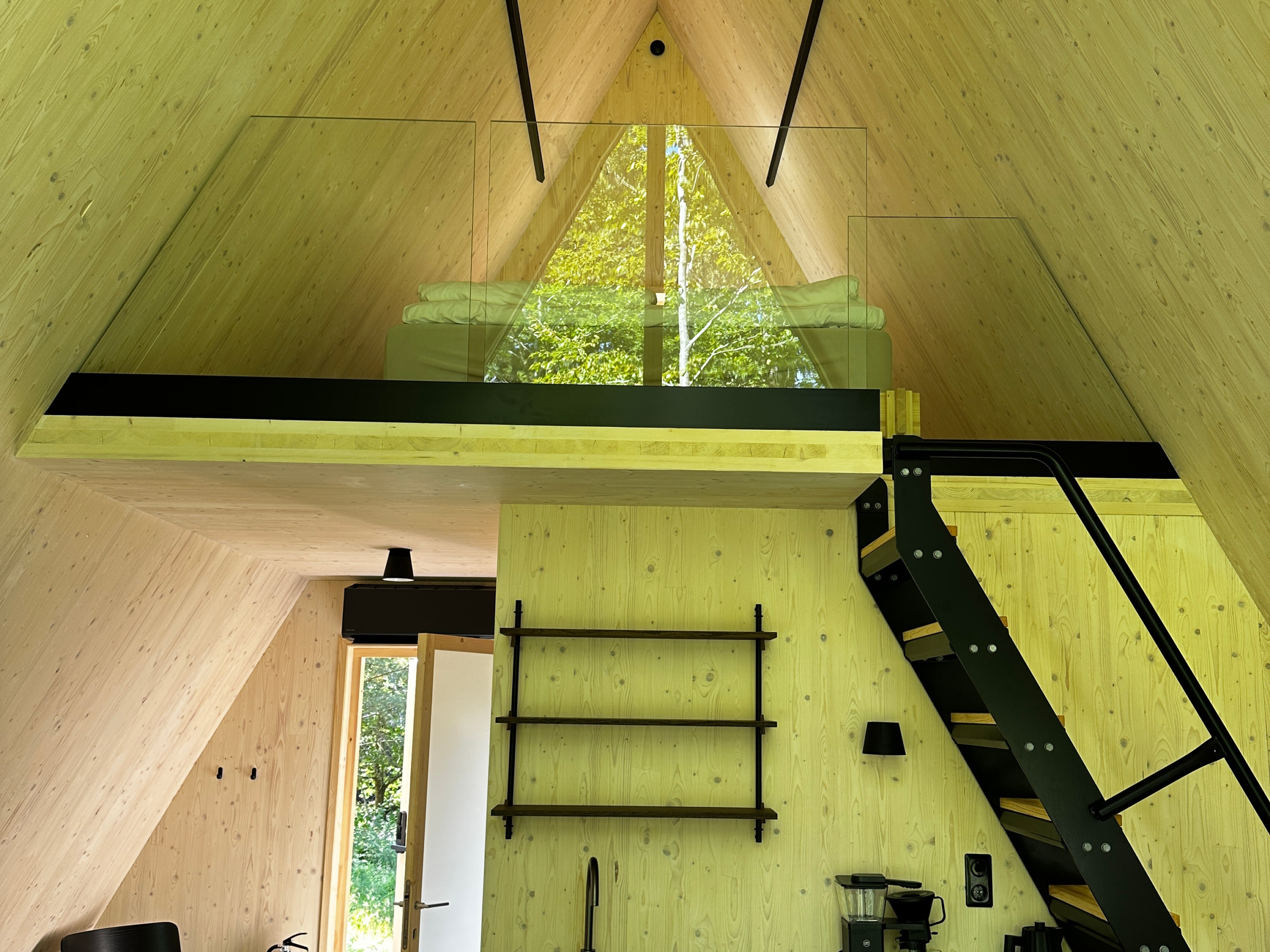
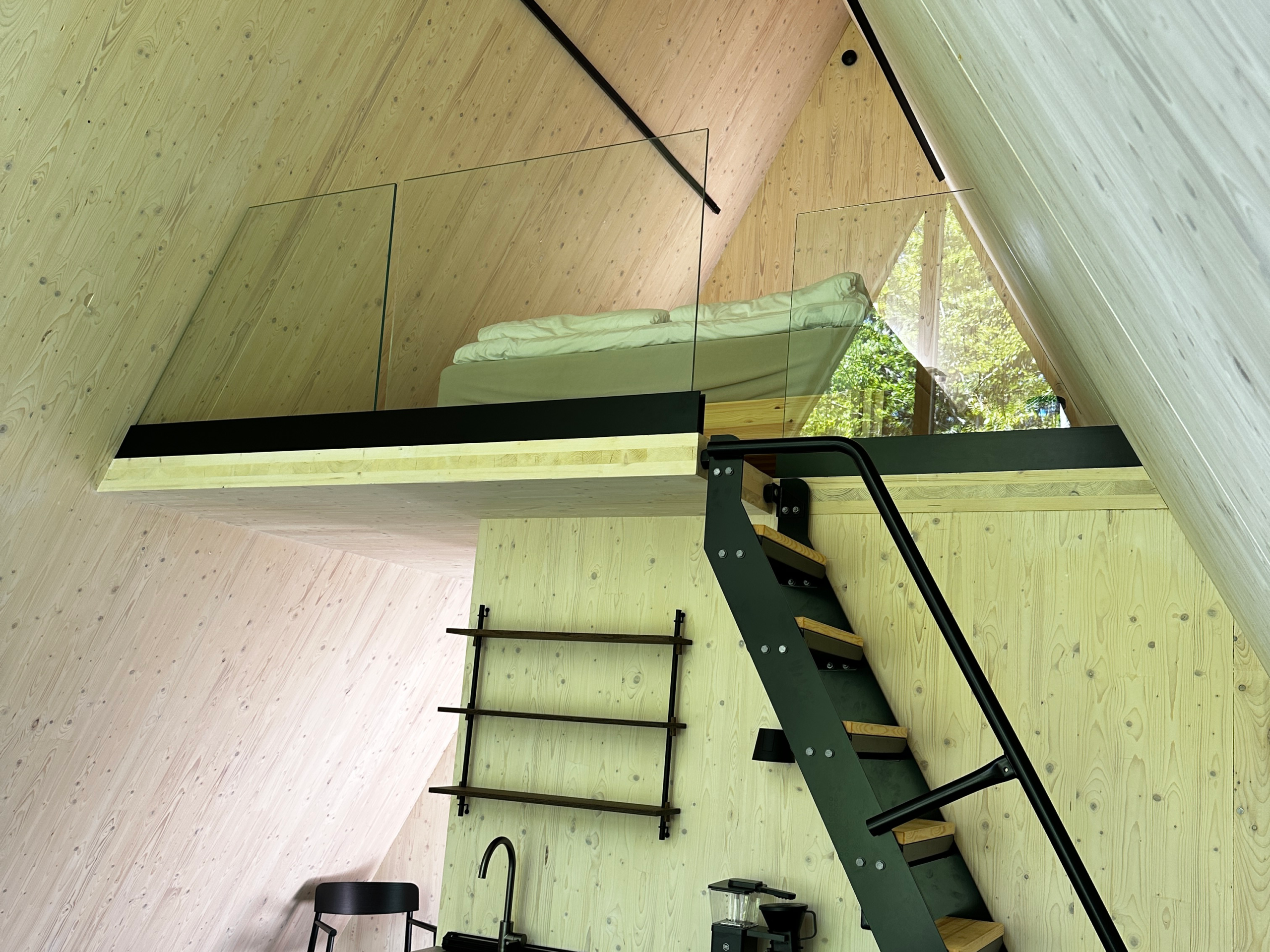
A loft or open stairwell is the place in a house where the railing has the greatest impact on the experience of the space. A solid railing blocks the light from the upper floor and visually divides the floor plan. A post-free glass railing does the opposite—it meets fall protection requirements without creating a visual barrier between the floors.
What is a postless glass railing, and why is it so popular for indoor use?
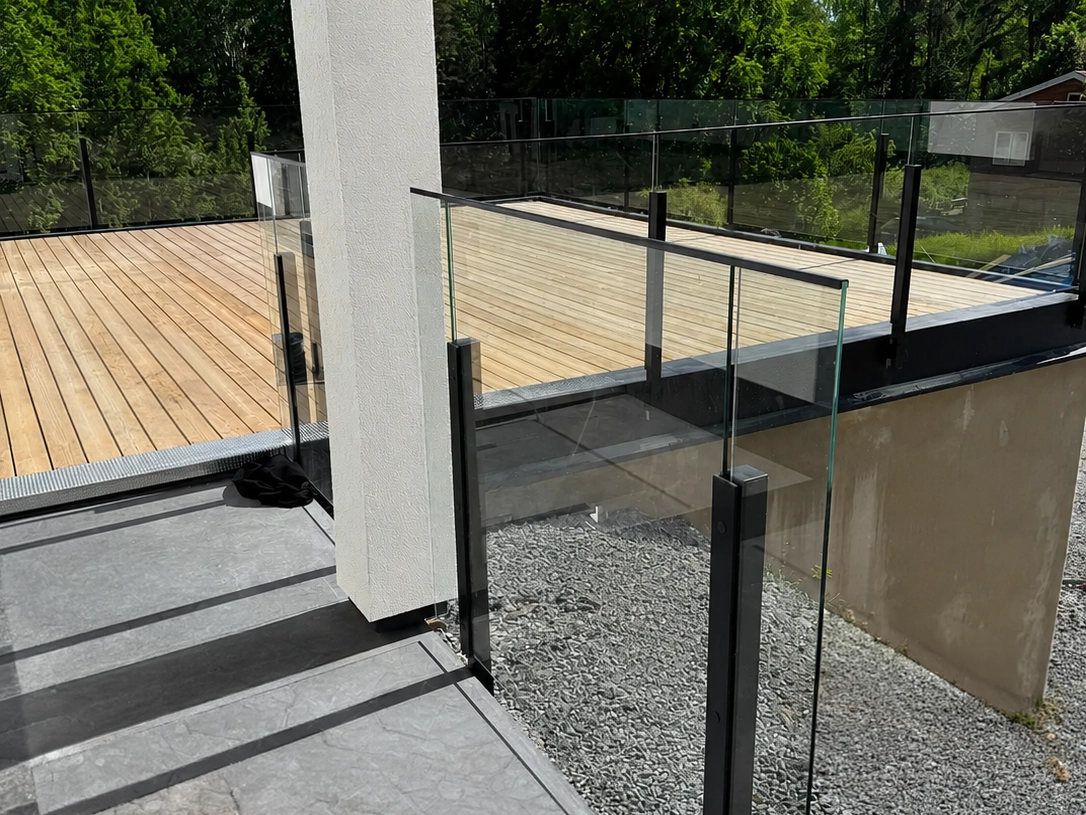
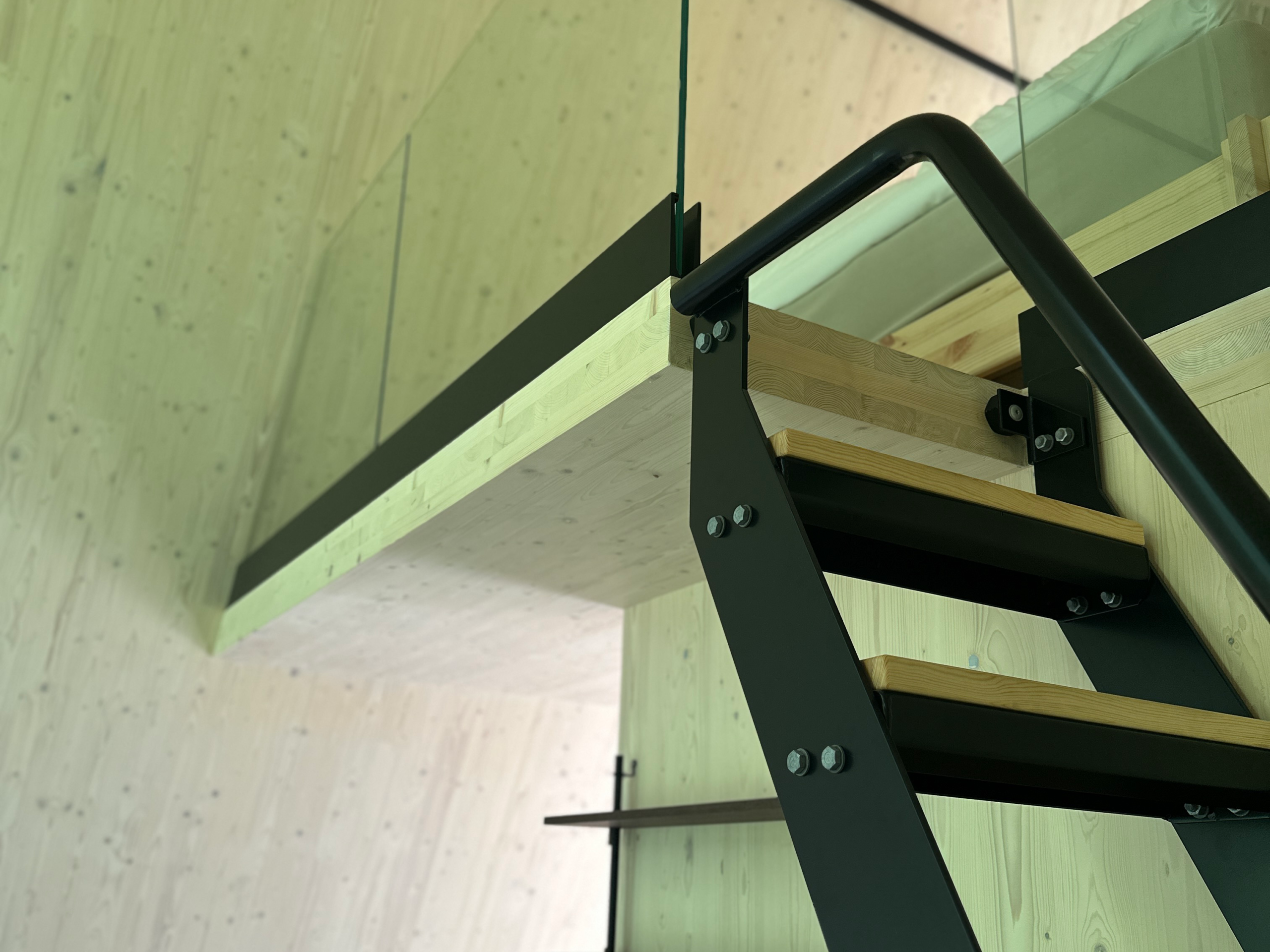
A post-free glass railing has no visible vertical posts or balusters. The tempered glass is set in a track profile that is concealed beneath the floor, embedded in the joists, or mounted against a base along the edge of the stairwell. The only things you see from the room are the glass itself and, if present, a handrail on top.
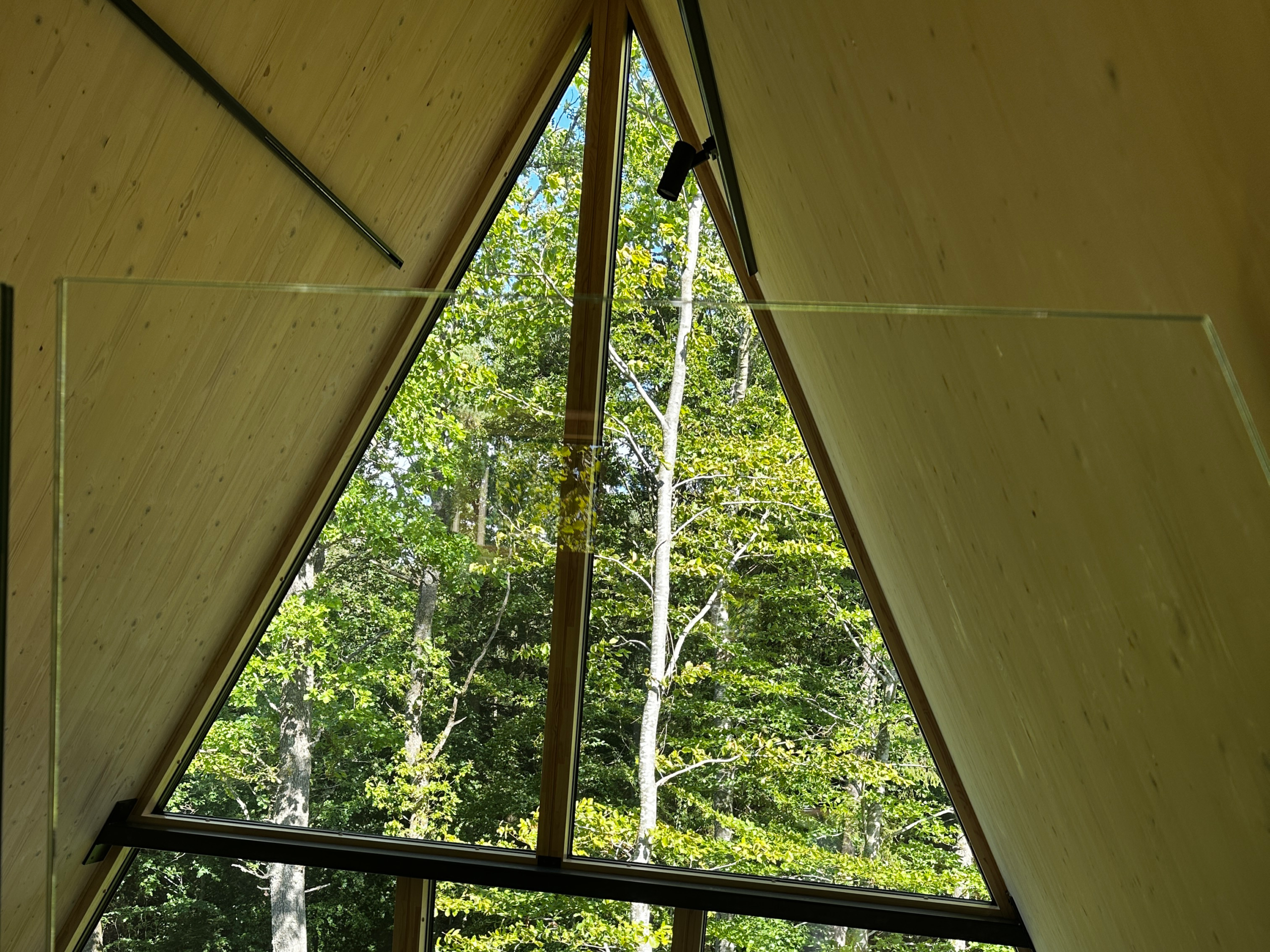
Indoors, this is particularly valuable in loft apartments, near stairwells, and in open-plan layouts where natural light from skylights or the upper floor needs to reach the lower floor. With a post-free railing, the floors function more as a single, continuous space rather than two separate areas. The result is a light and airy barrier that provides safety across the level difference without obstructing sightlines or altering the sense of spaciousness in the open interior.
The Swedish National Board of Housing, Building and Planning's regulations on stairwell openings and lofts indoors
Indoors, the Swedish National Board of Housing, Building, and Planning’s building codes for railings apply. For railings at stairwell openings and lofts in residential buildings, a minimum height of 900 mm is required for a fall height of up to 1.0 meter, and a minimum of 1,100 mm for greater fall heights. The railing must be able to withstand horizontal loads, which a properly dimensioned post-free glass railing can do without any problem.
It’s often during renovations that people discover that their old wooden railing or wrought-iron railing doesn’t meet current regulations—in which case, switching to post-free glass is both a safety upgrade and a visual upgrade at the same time.
Indoor glass railings don’t require any special cleaning beyond the occasional window cleaning. Fingerprints and dust show up a little more on glass than on wood or painted surfaces—you might want to install a handrail on top if children often hang onto the railing, so that their handprints end up on the handrail instead of the glass.
When is a post-free glass railing the right choice, and when should you choose something else?
The post-free option is the right choice when light, visibility, and a contemporary aesthetic are priorities. It is less appropriate when:
- If you're looking for a more artisanal or traditional look, a wrought-iron railing or a railing with a wooden handrail would be a better choice.
- The stairwell opening is very long and irregular—which makes the glass panels expensive and more difficult to install in sections, so a railing with posts might be a simpler option.
- You have young children who play a lot by the railing—not because of safety concerns (the glass is sturdy), but because it means a lot of fingerprints to wipe off.
Plan Your Post-Free Glass Railing
- The joist or floor edge—does it need to be reinforced? The postless railing attaches to a profile that often requires a solid surface of at least 100 mm to screw into. Check the surface before ordering.
- Handrail or not? If the railing is also part of the staircase, a handrail is generally required. On exposed loft edges where you’re just walking by, the railing can be omitted.
- Dimensions, corners, and any openings. Please send a sketch or photo with exact measurements—the glass panels are custom-made for each section.
Post-free glass railing and home value
Renovating the railings on the stairs and in the loft is one of the upgrades that stands out the most visually and that could potentially affect the home’s value in the event of a future sale. An old wooden railing that does not comply with current BBR regulations is also a formal deficiency that must be corrected before a home inspection at the time of sale. Switching to a post-free glass railing solves both issues at once—it brings safety up to code and visually opens up the space.
In modern homes, indoor glass railings are also one of the clearest indicators of the home’s overall level of sophistication—a mark of quality that’s evident the moment someone walks through the door.
Find the perfect railing for your home
Explore our wide selection of elegant glass railings or view all of our custom solutions for indoor spaces.