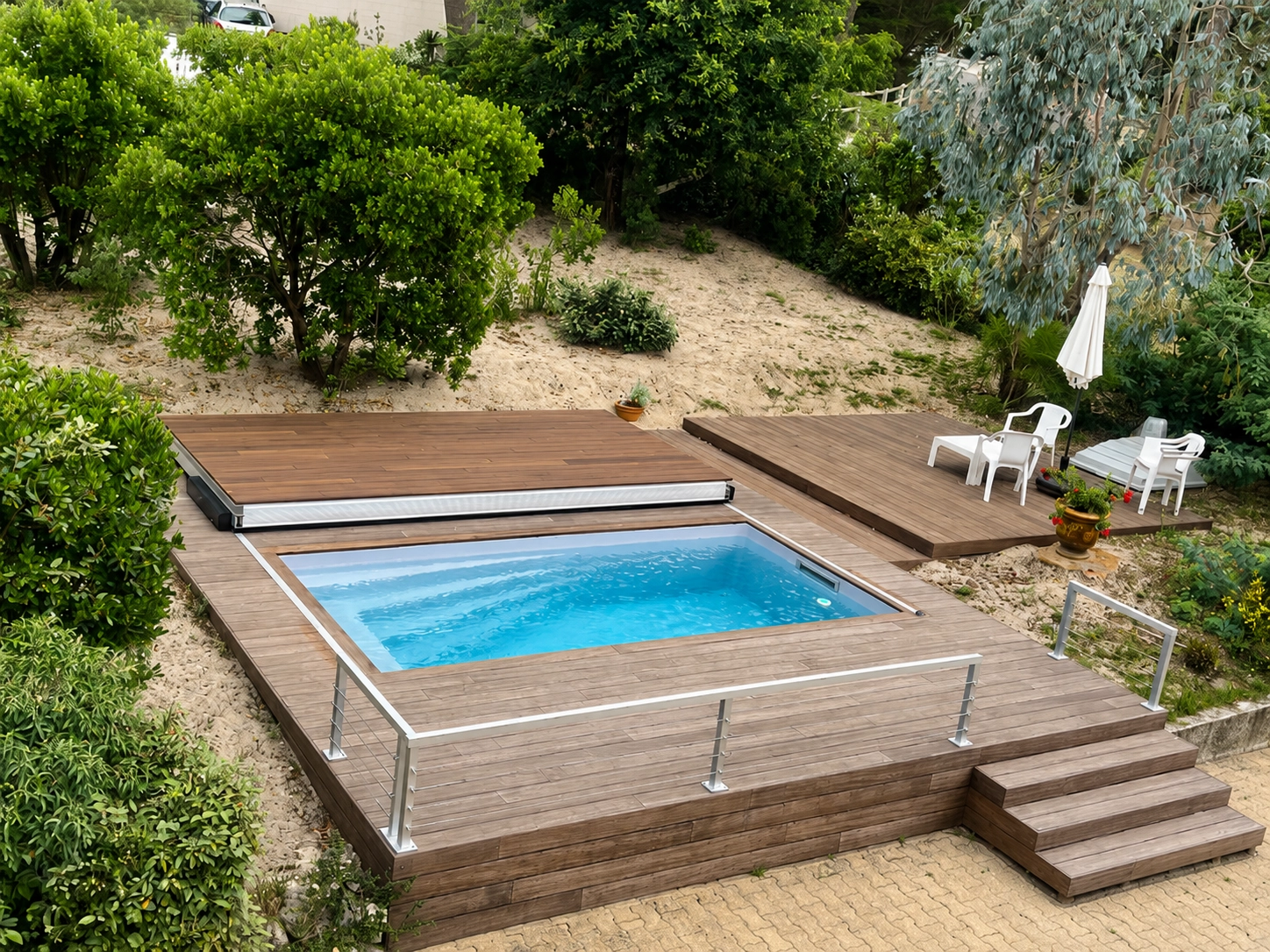
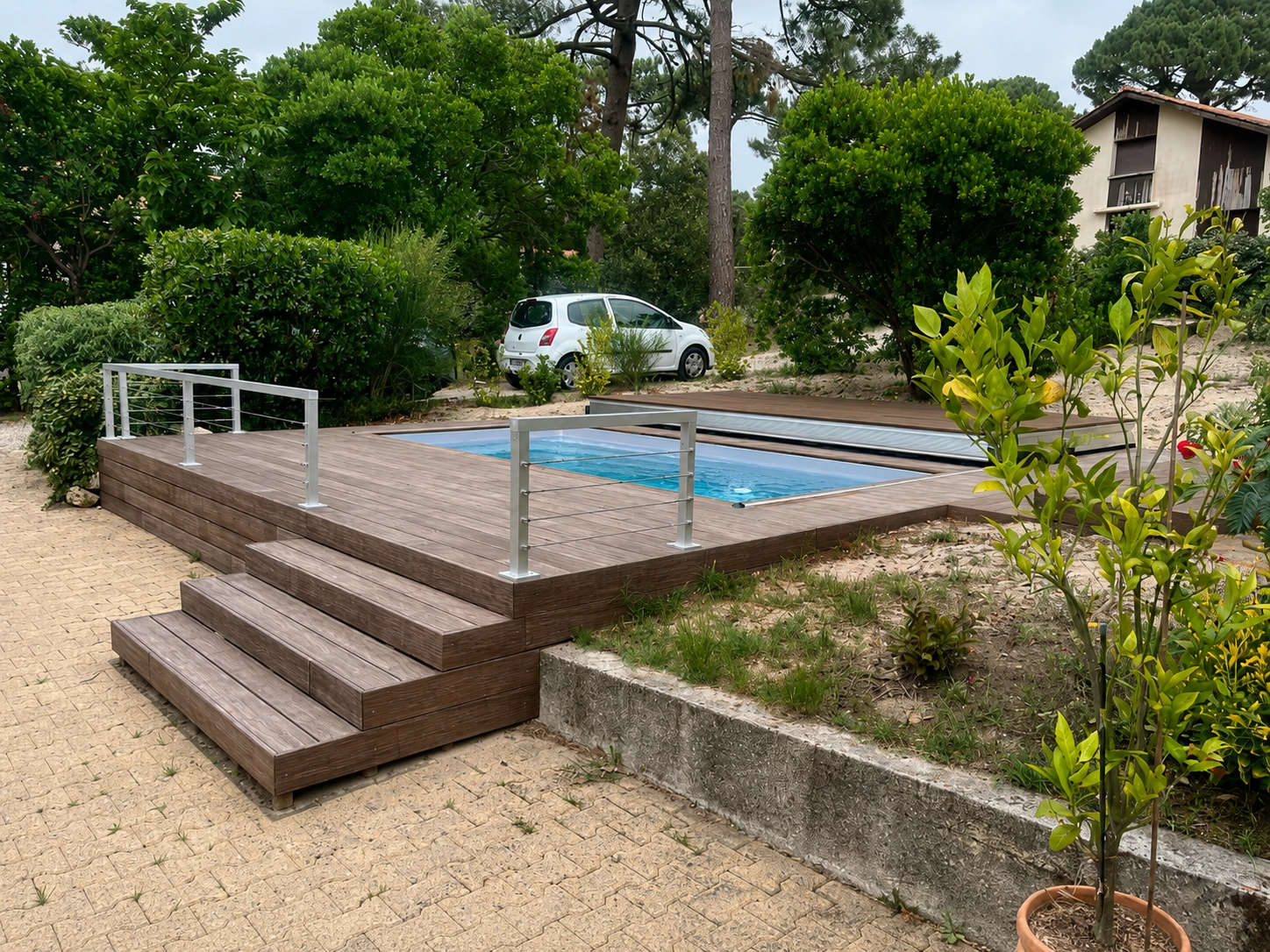
The starting point: a patio where the pool deck took center stage
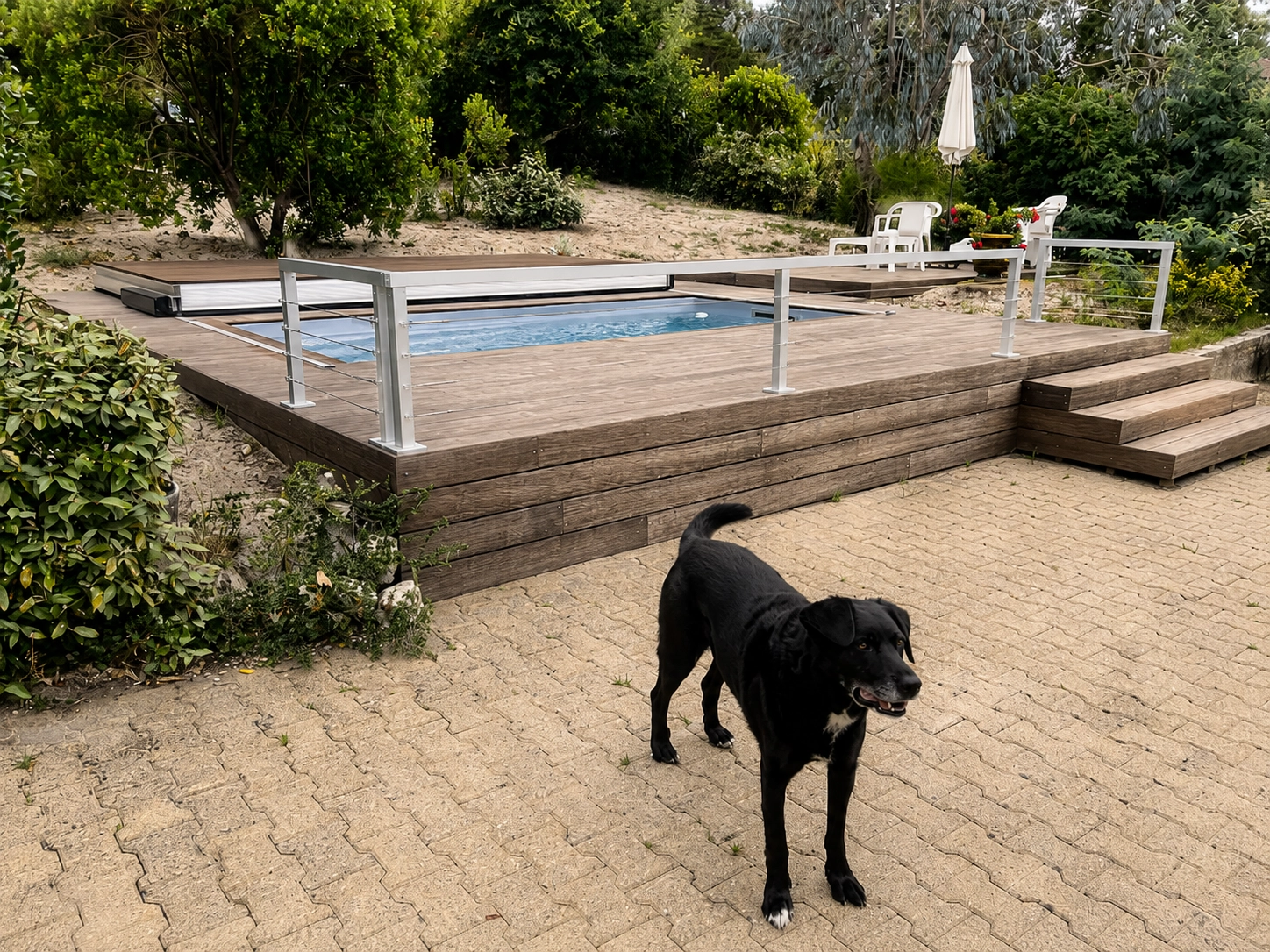
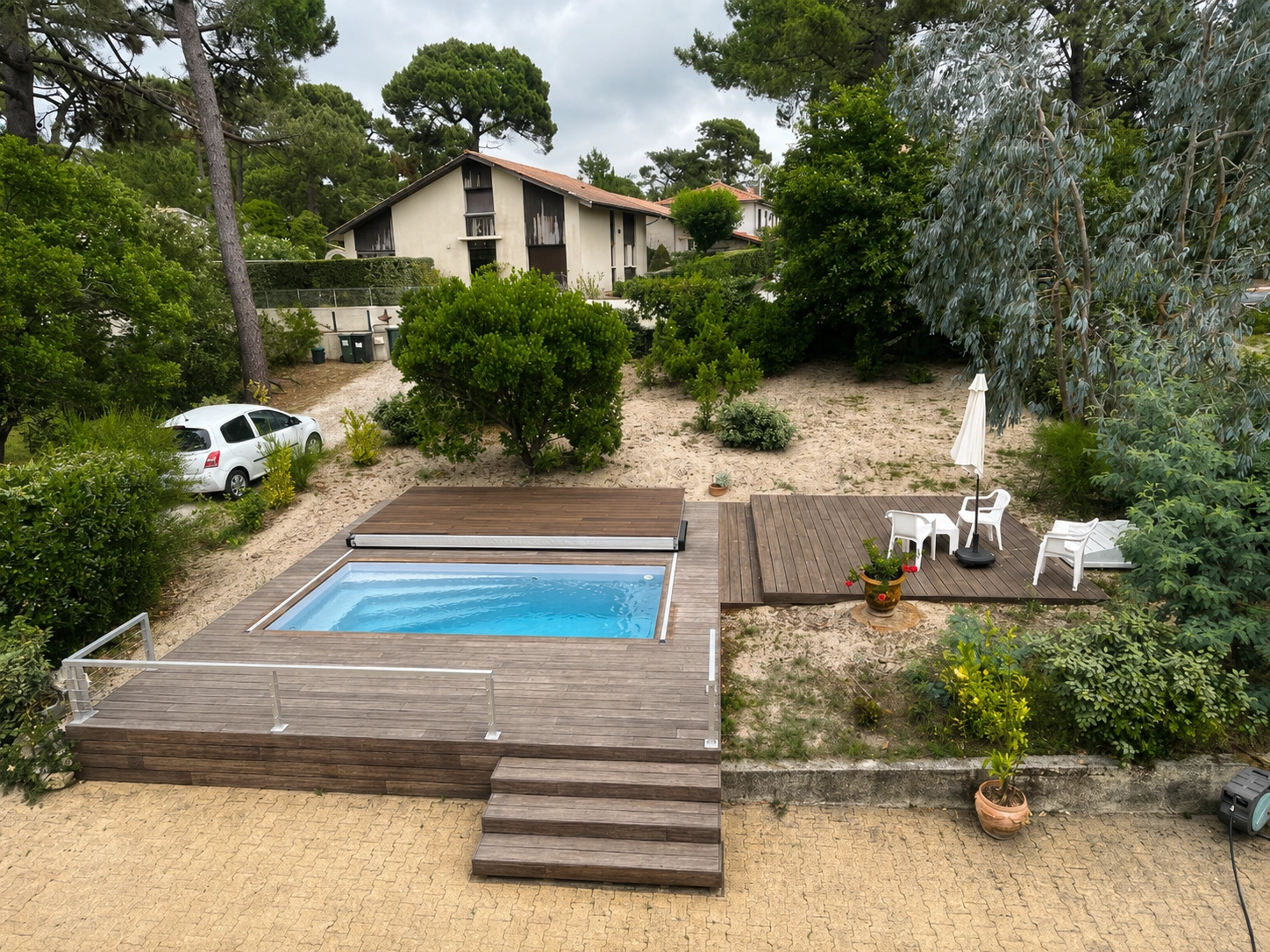
A patio with a built-in pool, a raised wooden deck in warm walnut tones, and a garden of pine trees, sandy areas, and southern greenery. This was the setting that inspired the project—a place with a serene character, natural materials, and clean lines. The pool deck extends generously around the water and continues out into a seating area for lounge chairs and a dining table. When the site already has such a strong character of its own, the railing becomes a delicate matter.
A railing around a pool or patio must serve two purposes at once: provide safety at the edge while blending into the overall design. More solid solutions—such as slats or glass—would have disrupted the open feel and obstructed the view of the garden. What was needed was a railing that is visible when it should be, and disappears when it doesn’t need to take up space.
The solution: a wire railing that frames the space without blocking it off
The choice fell on Linea, an aluminum cable railing with horizontal stainless steel cables. It’s a railing design that’s ideal for outdoor spaces where openness and views are key—and that lets the rest of the space take center stage. The railing clearly marks the edge of the deck, but without drawing attention away from the pool, the wooden deck, or the garden beyond.
In this particular project, the railing’s light silver tone helps accentuate the warm tone of the composite deck. These two materials work in harmony rather than at odds with one another. The result is an outdoor space that feels like a cohesive room in the open air, where each element—the pool, the deck, the stairs, and the railing—has its place without competing with the others.
Railings for Pool Decks and Patios—Here’s Why Cable Works So Well
A wire railing creates a completely different feel than a railing made of slats or glass. The horizontal lines are thin, the gaps are open, and your gaze can wander unobstructed through the railing toward the water, the plants, or the landscape. That’s why wire railings have become a popular choice for modern patios, wooden decks, and pool decks where the design is meant to feel minimalist and stylish.
When it comes to pool railings, there’s another advantage: a cable railing doesn’t obstruct air circulation and therefore keeps the areas around the water well-ventilated. It’s a detail that’s often overlooked during the planning phase but makes a noticeable difference in everyday life—less condensation on the deck and a lighter, more airy feel throughout the outdoor space.
Balcony railing height – what does the Swedish National Board of Housing, Building, and Planning say?
Railings on patios, balconies, and outdoor decks are subject to the Swedish National Board of Housing, Building, and Planning’s building regulations (BBR). A railing is required for a fall height exceeding 0.5 meters. For fall heights between 0.5 and 1.0 meters, the railing height must be at least 900 mm, and for fall heights exceeding 1.0 meters, at least 1,100 mm. The height is measured from the finished floor surface—the top of the deck—to the top edge of the railing.
With pools, there are often requirements for child-safe protection around the water itself. This is a separate issue from the railing’s fall-protection function, and in many projects it is addressed with an automatic pool cover that covers the water’s surface. This way, the railing can focus on its aesthetic and boundary-defining role—while pool safety is handled by a solution designed specifically for that purpose.
Inspiration for those planning railings for a balcony, patio, or pool deck
- What kind of feel should the railing convey? A wire railing creates a sense of openness and a sleek, modern look. Glass railings let light through but reflect it more. Horizontal slats made of wood or aluminum lend a warmer character and provide more privacy. Consider what the space is meant to convey—and choose your railing accordingly.
- What is the surrounding environment like? Materials that can withstand sun, moisture, and outdoor use will last for decades. A stainless steel outdoor railing is a safe choice near a pool, on the coast, or in exposed locations—it won’t rust, requires no maintenance, and retains its finish year after year.
- How high is the drop? According to Boverket, this determines the minimum height of the railing. Measure from the finished floor surface before you order—not from the ground below—so the measurements are correct from the start.
Benefits of Outdoor Cable Railings
- An open design that preserves the view—perfect for the pool, the ocean, or the garden.
- A sleek, modern look that enhances balconies, patios, and wooden decks.
- Withstands weather, moisture, and pool water without rusting or requiring maintenance.
- Thin lines that take up minimal visual space—the railing does not dominate the space.
- Long service life even in exposed locations such as coastal or poolside environments.
A railing that frames the space—not the other way around
This project shows that a railing around a pool or patio doesn’t have to be the first thing you notice. With the right choice, the railing becomes a subtle structure that defines the edge, provides safety, and lets the pool deck, the water, and the garden take center stage. The railing shouldn’t be the star of the show—it should enhance the rest of the outdoor space. Find inspiration among our selection of cable railings for patios, outdoor spaces, and wooden decks.