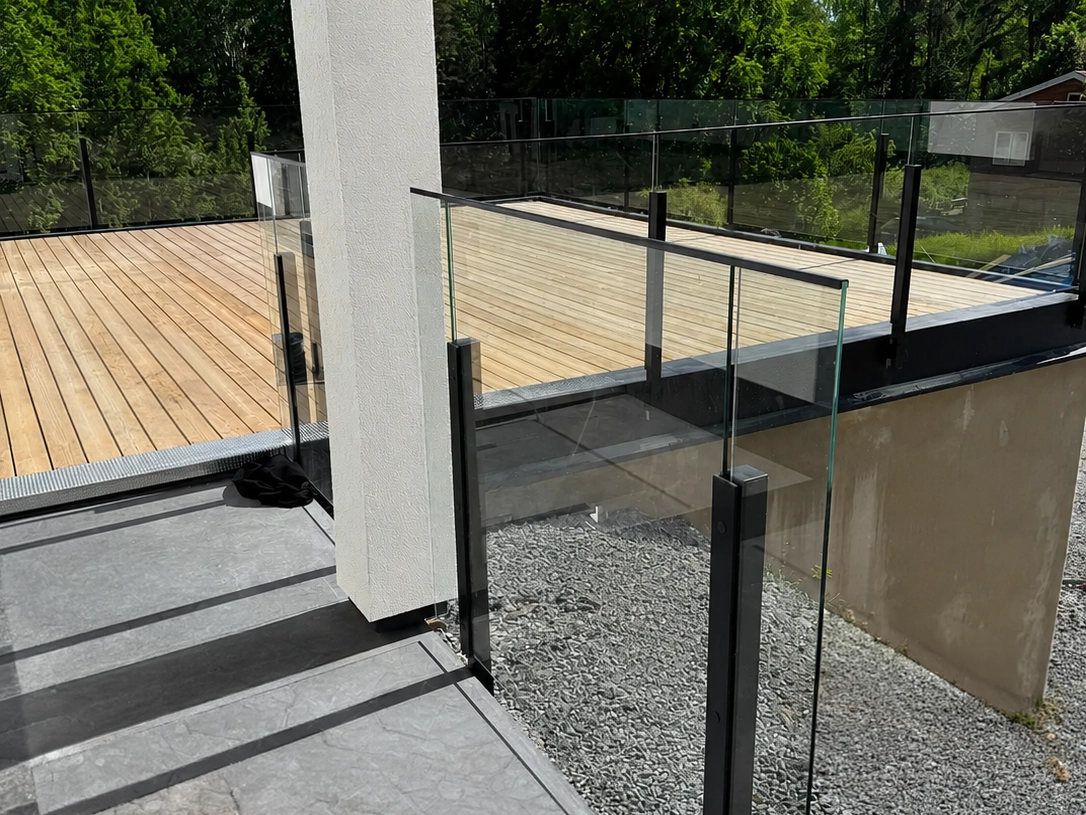
The design is easy to understand. Raw metal, simple form, and a clear reference to an industrial setting.
The problem isn't aesthetics. The problem is that rebar is designed to do something completely different than to be left exposed to the elements. This becomes especially important when the structure is also intended to serve as a railing and fall protection.
This article discusses what happens when rebar is used as a railing, when it can work, and what alternatives offer a similar industrial look. Rebar is not included in Räckesbutiken's product line.
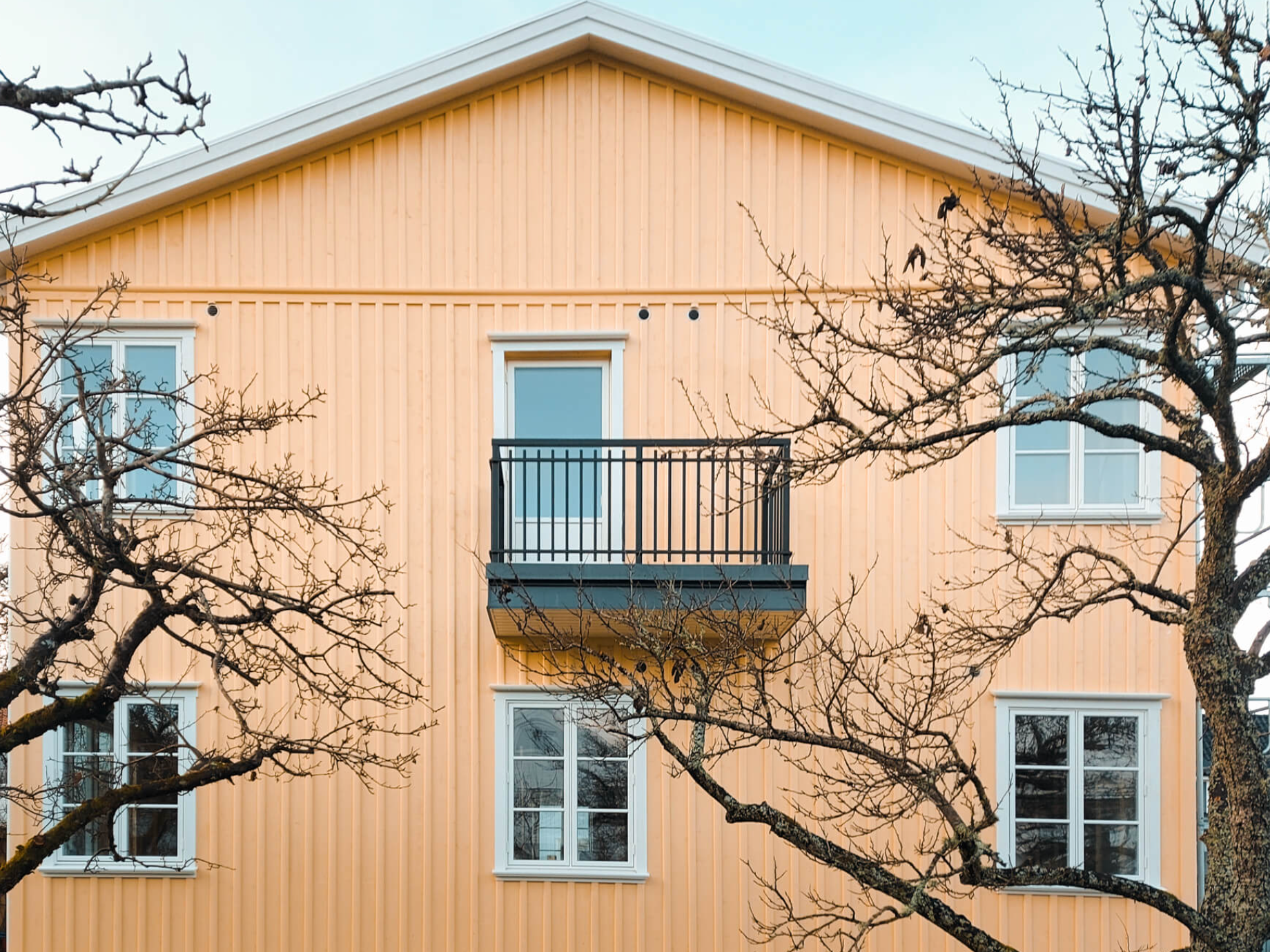
The material is designed to be cast
Reinforcing bars do not normally have a separate surface treatment to prevent rust. Instead, protection comes from the environment surrounding the steel when it is embedded in concrete.
The concrete protects the steel
Concrete has a high pH. The alkaline environment causes a protective passivation layer to form on the steel surface, which slows down corrosion.
Protective environment around the steelThat same protection is no longer available
When rebar is left exposed to rain, moisture, and air, the concrete’s rust-protective environment can no longer be relied upon. The untreated steel is directly exposed.
Untreated steel is exposedRISE describes how steel surfaces in concrete with a pH of around 12–13 develop a protective passivation layer. Read about rebar corrosion in concrete at RISE ↗
What Happens in Practice
The problems aren't just noticeable in the long term. Several of them become apparent fairly quickly when the rebar is used as a finished railing.
Rust streaks appear first
Rainwater running over untreated iron can cause rust and leave brown stains on decking, concrete, and stone.
On light-colored surfaces, the discoloration can be very difficult to remove.The surface is designed for concrete—not traction
Reinforcing bars have ridges and may have surface irregularities. This is an advantage when the steel is to be anchored in concrete, but it is significantly less suitable for parts of the railing that people can touch.
It should be possible to touch and use a handrail without the rough surface posing a problem.Horizontal iron bars become steps
If the rails are installed horizontally, they can serve as a ladder. In areas where children under six years of age are allowed to be without constant supervision, the bottom 80 centimeters must be designed to prevent climbing.
In practice, a horizontal structure does the opposite.When It Can Work After All
Reinforcing bars aren't necessarily a problem in every situation. The key factor is whether the structure is intended to serve as fall protection or merely as a decorative barrier.
| Situation | Assessment |
|---|---|
| Garden Boundary Without a Drop |
Works
The structure then serves as a barrier or decoration, not as fall protection. |
| Trellis or plant support |
Works well
Here, the material's flexibility and raw appearance can be an advantage. |
| Balcony railing with fall height |
Not recommended
The structure must be certified as fall protection, for which a homemade solution typically lacks the necessary documentation. |
| Balcony or Staircase |
Inappropriate
Here, the safety function of the railing is crucial, and a certified railing system is a significantly better choice. |
| Where young children are present |
Not horizontal
Horizontal iron bars can serve as footholds and eliminate the need for a lower zone protected against climbing. |
If the structure is merely a barrier that poses no risk of falling, the same requirements do not apply. If, on the other hand, it is intended to prevent someone from falling, it must be treated as a railing and designed accordingly.
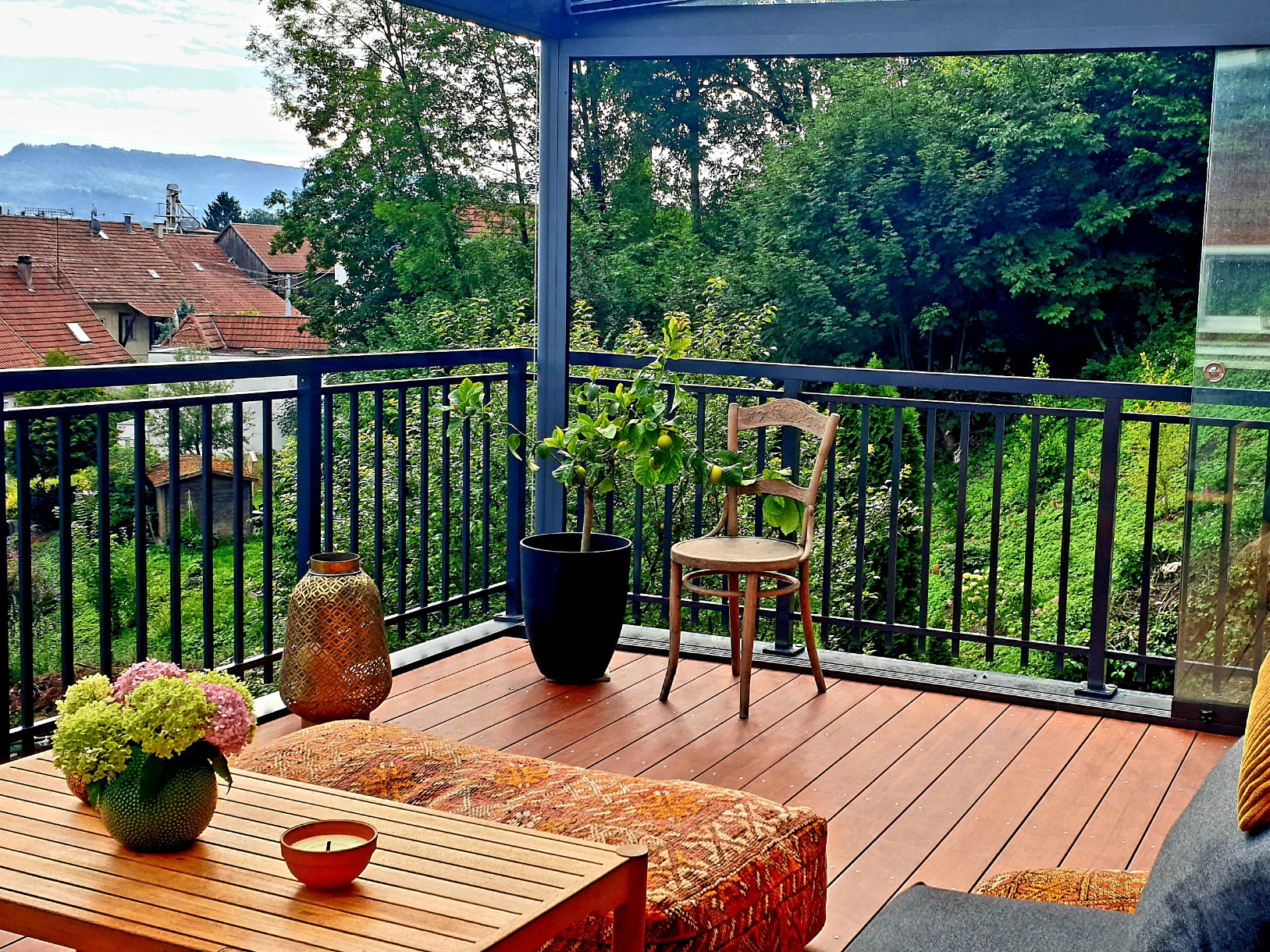
The alternative that offers the same experience
A wrought-iron-inspired railing made of powder-coated aluminum closely resembles the look that many people seek in rebar: narrow profiles, a dark matte finish, and minimal detailing.
Posts, balusters, and fasteners are part of a system designed to withstand the load that a railing is intended to bear.
The matte black finish gives it an industrial look without requiring the steel surface to be left untreated.
Räckesbutiken's Retro comes with a declaration of performance, and the manufacturing process is certified in accordance with EN 1090-1, with external inspection by RISE.
Here's how to do it—step by step
Start by figuring out what the structure is actually supposed to do. Once you’ve answered that question, it will be much easier to determine whether rebar is the right choice at all.
-
1First Question
Is it a fall protection device or just decoration?
Decide whether the structure is intended to prevent someone from falling, or simply to mark a boundary, support plants, or create a certain look.
-
2If it's fall protection
Choose a design that can be verified
The railing must be designed to meet its intended purpose, and its materials, fasteners, and joints must be evaluated as a whole.
-
3If it's for decoration
In that case, rebar can be used
For example, as a trellis, plant support, or barrier that poses no risk of falling, the material can be used without the structure needing to function as a railing.
-
4Child Safety
Check whether the structure can be climbed
Horizontal bars can serve as steps. In areas where younger children play, the bottom section should be designed to prevent climbing.
-
5Keep the surface in mind
Expect rusty water
Untreated steel can leave brown rust stains on stone, concrete, and decking. On light-colored surfaces, the discoloration can be difficult to remove.
-
6Compare the expression
See also matte black aluminum
If it’s mainly the raw, dark look you’re after, narrow powder-coated aluminum profiles can create a similar look without the untreated steel surface.
-
7Before You Start Building
Check whether permits or other requirements are affected
If the construction alters the building's facade or is part of a larger renovation project, the municipality may need to assess what applies to your specific property.
Do you want the same feel—but a railing built for the job?
Tell us what look you're going for and where you want the railing to go, and our customer service team will help you find a solution with slim profiles and a matte black finish.
Frequently Asked Questions About Rebar Used as Railings
Here are the most common questions about usage, rust, child safety, and alternatives to rebar.
Can you use rebar as a railing?
As a decorative barrier without a fall height, yes. As fall protection, it is not recommended, since the structure lacks documented strength.
Why does rebar rust so quickly?
It has no surface treatment. Protection normally comes from the alkaline environment of the concrete, and it disappears when the iron is exposed.
Is that against the rules?
There is no ban on the material. What is missing is the documentation showing that the structure can withstand the load.
Can you paint rebar?
Yes, but the paint doesn't adhere well to the combs and mold beads, and the maintenance interval is short.
Is it safe where children are playing?
No, if the rails are horizontal. The bottom 80 centimeters are intended to prevent climbing in areas where children under six years of age are present.
Which of the following has the same meaning?
Powder-coated aluminum in matte black with narrow vertical slats. The same look, without rust and with proven performance.
Can I use it as a trellis instead?
Yes, and the material is actually quite good. It's designed to be bent and requires no documentation.