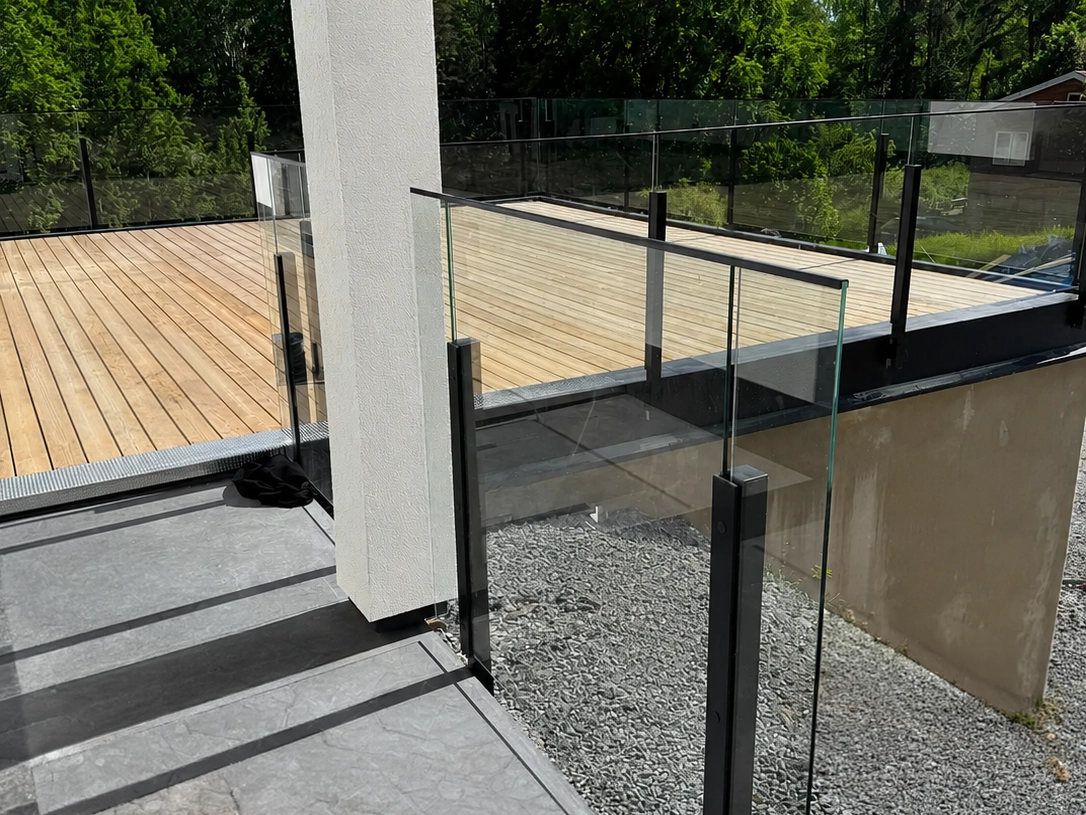
All glass used in a railing must be safety glass. This is not a recommendation but a requirement, since ordinary glass shatters into sharp shards and leaves an opening where the railing should be.
However, "safety glass" is a general term for two completely different technologies: tempering and lamination. They address different issues, and which one you need depends on the drop height.
In this article, we'll go over what sets them apart, when you need both, and what thickness to use.
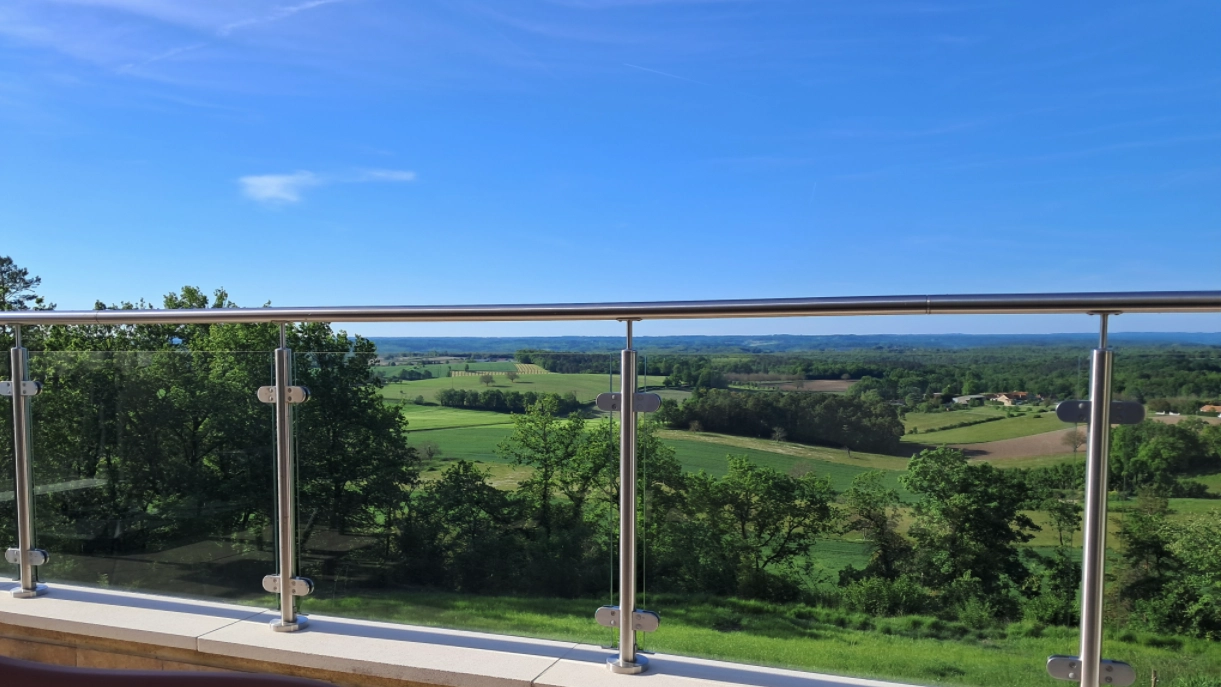
Tempered or laminated safety glass—what's the difference?
Tempering makes the glass stronger. Laminating keeps it together even when it breaks.
Stronger, but leaves an opening
Tempered glass is stronger, but if it does break, the entire pane shatters, leaving an opening in the railing.
Holds the shards in place in the foil
Laminated glass is weaker, but it holds the shards together and therefore remains in the opening if the glass breaks.
| Property | Tempered glass | Laminated glass |
|---|---|---|
| Manufacturing | Heat-treated | Two sheets with PVB film in between |
| Strength | Four to five times as strong as ordinary glass | Like regular glass, unless it's tempered |
| In the event of a crime | Breaks into small, blunt pieces | The shards are still stuck in the foil |
| Opening in the railing | Yes, the glass falls out | No, the glass stays in place |
| That alone is enough | When the drop height is limited | Often indoors |
Tempered Laminated Glass—When Both Are Needed
This combination provides both the strength from the hardening process and the cohesion from the lamination.
At high drop heights and high loads
Tempered laminated glass is standard in structures where a person might fall and where the load on the railing is high.
Pole-free and height-adjustable
Postless railings pose the greatest challenges, since the entire load is supported by the glass and the track instead of being distributed among posts. The same applies to height-adjustable railings, where the structure also moves.
Which type of safety glass is best suited for which environment?
The drop height, intended use, and railing design determine the type of safety glass that is normally required.
| Environment | Recommended glass | Why |
|---|---|---|
| Balcony with a low drop height | Tempered | Impacts are the most likely cause of wear and tear |
| Balcony with a drop height | Tempered laminated | No opening may occur |
| Balcony | Tempered laminated | Large drop height |
| Indoor Staircase | Laminated | Fall protection is the main purpose |
| Indoor Room Dividers | Tempered | No drop height |
| Around the pool | Tempered laminated | Children spend time in the environment |
| Postless railing | Tempered laminated, heavy-duty | The entire load is captured in the glass |
Thickness and Load
The thickness cannot be chosen arbitrarily. It is determined by the railing's design, mounting, and the load it is intended to support.
- About 8 mm
- Commonly used indoors, in room dividers, and where the drop height is limited.
- 10 to 12 mm
- Commonly found outdoors on post-mounted railings on patios and balconies.
- 17 to 21 mm
- Post-free outdoor solutions, where the glass supports the entire structure.
In addition to thickness, the filling must be able to withstand what is known as dynamic impact , that is, the force exerted by a person who stumbles into the glass. It is this calculation that determines the thickness actually required for your specific design.
The surface does not affect safety
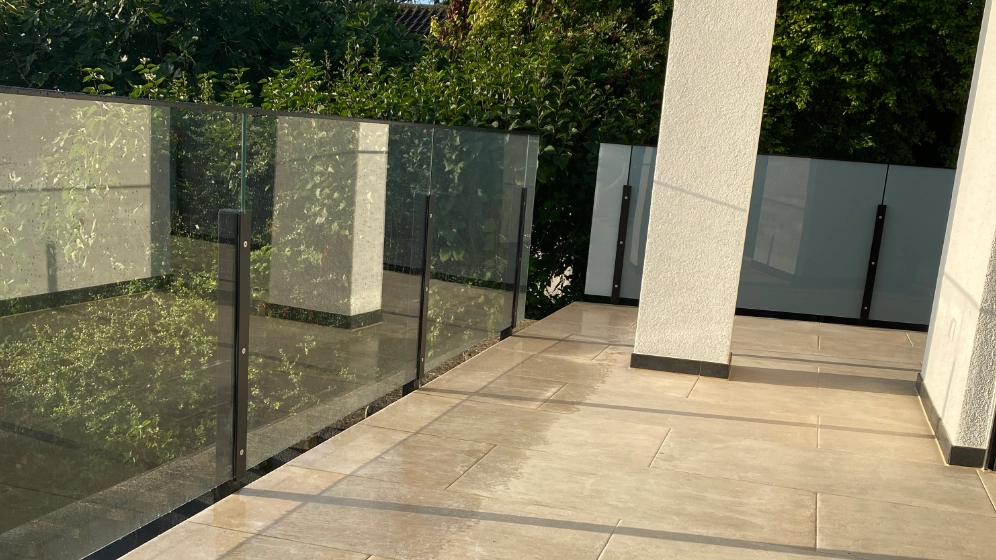
Clear, frosted, tinted, and smoked glass are all available as safety glass. The choice of finish determines how much light and visibility pass through, not how safe the railing is.
- The surface has an effect
- Natural light, visibility, and the visual appeal of the railing.
- Safety is determined by
- Type of glass, thickness, load, and how the glass is mounted.
If you'd like to read more about how these different types of glass differ in appearance and function, we have a separate article on clear, frosted, and tinted glass .
How to Choose Safety Glass—Step by Step
Measure the drop height
The drop height determines whether laminated glass is required.
Determine the design
Decide whether the railing should be post-supported or post-free.
Select glass type
Select the type of glass based on the drop height and the load the railing must withstand.
Check the thickness
The thickness should be determined by the design, not chosen based on personal preference.
Select surface
Choose the glass finish based on how much light and visibility you want.
Check with the municipality
Check to see if a building permit is required before ordering the railing.
Not sure what type of safety glass is required?
Start by determining the drop height and whether the railing should be post-free. Customer service will help you choose the glass type, thickness, and mounting method before you place your order.
Frequently Asked Questions About Safety Glass in Railings
What is the difference between tempered and laminated glass?
Tempered glass is heat-treated and four to five times stronger than ordinary glass, but shatters completely when broken. Laminated glass consists of two panes with a film in between that holds the shards together.
What type of glass is required for a certain drop height?
Laminated, or more specifically, tempered laminated glass. Tempered glass alone leaves an opening if the pane breaks.
Is tempered glass sufficient for indoor use?
Yes, as a room divider and where there is no drop height. On stairs and in lofts, the glass should be laminated.
How thick should the glass be?
Approximately 8 mm indoors, 10 to 12 mm in post-supported railings outdoors, and 17 to 21 mm in post-free solutions. The exact thickness is determined by the design and load.
Is frosted glass just as safe as clear glass?
Yes. The surface treatment affects light transmission and visibility, not safety. All variants are available as safety glass.
Why do postless railings require thicker glass?
Without posts, the entire load is borne by the glass and the rail rather than being distributed, which requires greater thickness.
What does “dynamic impact” mean?
The force exerted by a person who stumbles into the glass. The glass panel must be able to withstand that force, which is one of the factors that determine its thickness.