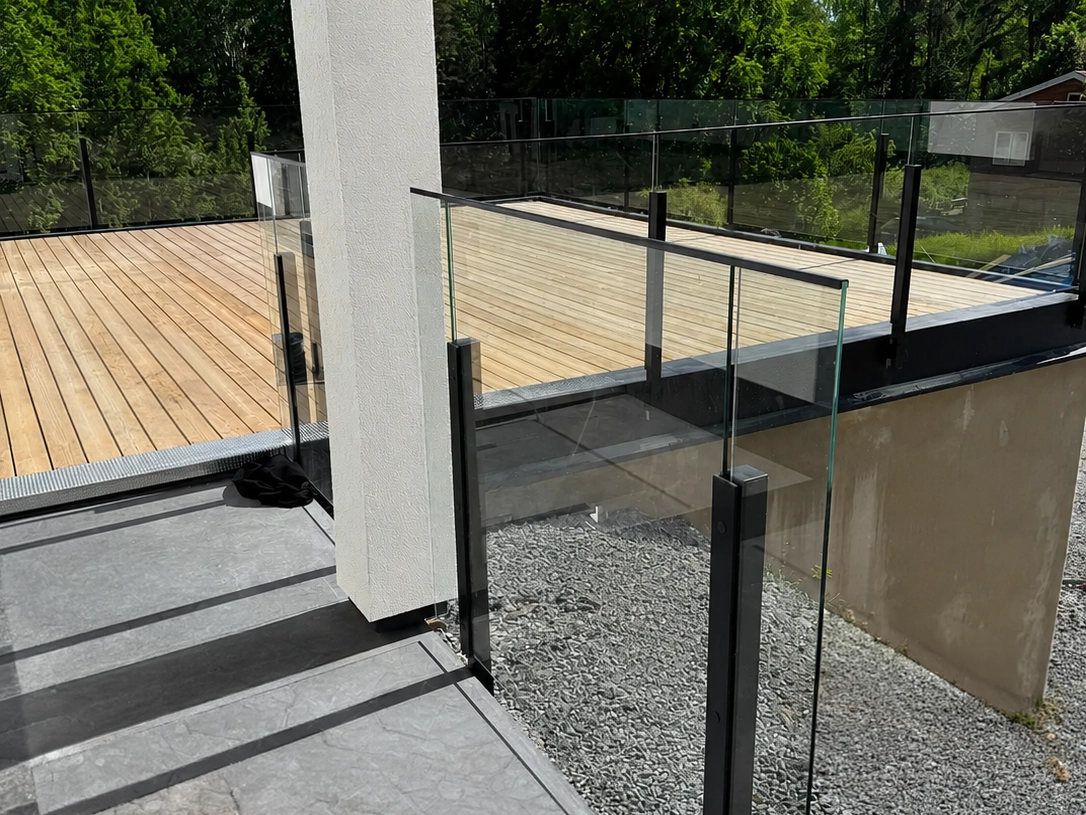
A handrail is one of the few items in the home that really has to work when something goes wrong. If someone slips and grabs hold of it, it’s the mounting—not the rail itself—that determines whether it will hold.
That’s why a secure installation doesn’t start with the height, the appearance of the brackets, or the material of the handrail. It starts with finding a load-bearing surface to which the brackets can actually be anchored.
The basic principle is simple: The handrail should be sized and installed to support someone falling against it—not just a hand resting on it.
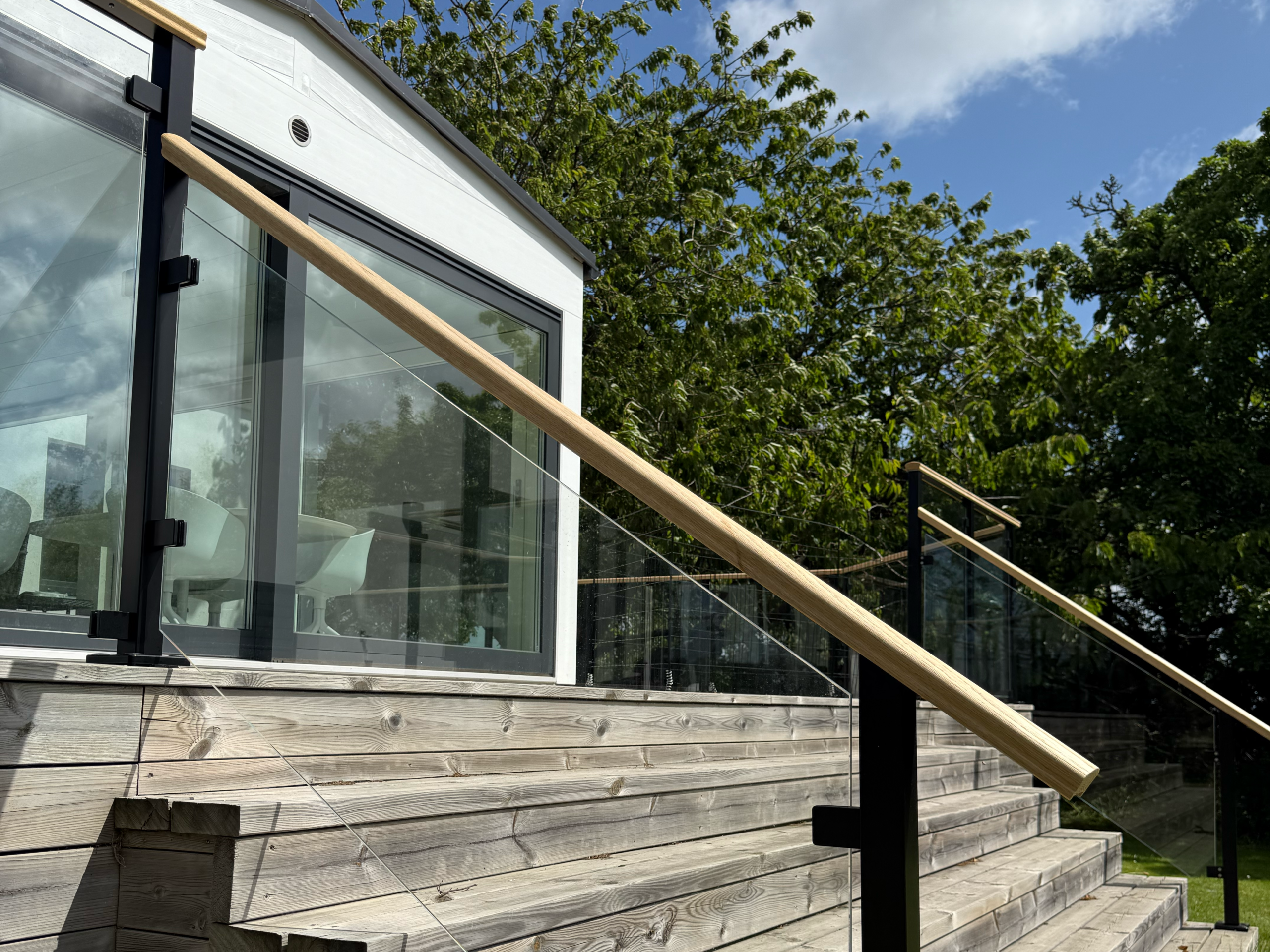
The mount is the whole job
The support should be strong enough to support a person falling against it, not a hand resting on it. These are two completely different forces, and the greater one is the deciding factor.
The fastener must therefore be secured to a load-bearing material. What this means depends on where the handrail is installed.
Attach to the stud
On an interior wall, the bracket must be anchored to a stud. It is the stud behind the wall that must bear the load, not the panel in front of it.
Attached to the load-bearing structure
If the handrail is mounted directly on the staircase, the fastener must be secured to the stringer or another load-bearing side structure.
Mount on a post or solid wall
On an outdoor staircase, the handrail must be anchored to a sturdy post or a solid wall that can support the load.
Three Ways to Install
The best solution depends primarily on what is next to the staircase and whether there is already a railing to build upon.
| Installation | Fits | Things to Keep in Mind |
|---|---|---|
| Wall Mount | Indoor staircase with a wall on one side | The studs are rarely where you want them to be |
| Pole-mounted | Outdoor staircase without an adjacent wall | The post must be anchored to a load-bearing surface |
| On top of the railing | Where there is already a railing | Also serves as a crossbar |
In that case, a separate handrail is rarely needed. In many cases, you can instead replace the crossbar with a profile designed to be gripped. Learn more about handrails and crossbars
Elevation and Distance
The regulations no longer specify a particular height for handrails on stairs. In practice, about 90 centimeters is used as a guideline.
This measurement follows the slope of the staircase from the front edge of the step up to the handrail. So don't measure from the floor—that's a common reason why the handrail ends up in the wrong place.
If the brackets are spaced significantly farther apart, the profile may begin to sag in the middle. It feels unstable even if each bracket is properly secured on its own.
Handrails on both sides
This has changed, and it's worth knowing before you place your order.
- Previously A handrail was the standard
- Handrails on both sides were the exception and were primarily found on wider staircases.
- Today Handrails on both sides are the starting point
- One side, however, is an exception. The assessment is based on the staircase’s use and design.
The previous correlation between the width of the staircase and the need for handrails on both sides no longer applies.
We go over the complete set of regulations in our article on railing requirements . You can also read the Swedish National Board of Housing, Building, and Planning’s regulations on railings and handrails .
Outdoors
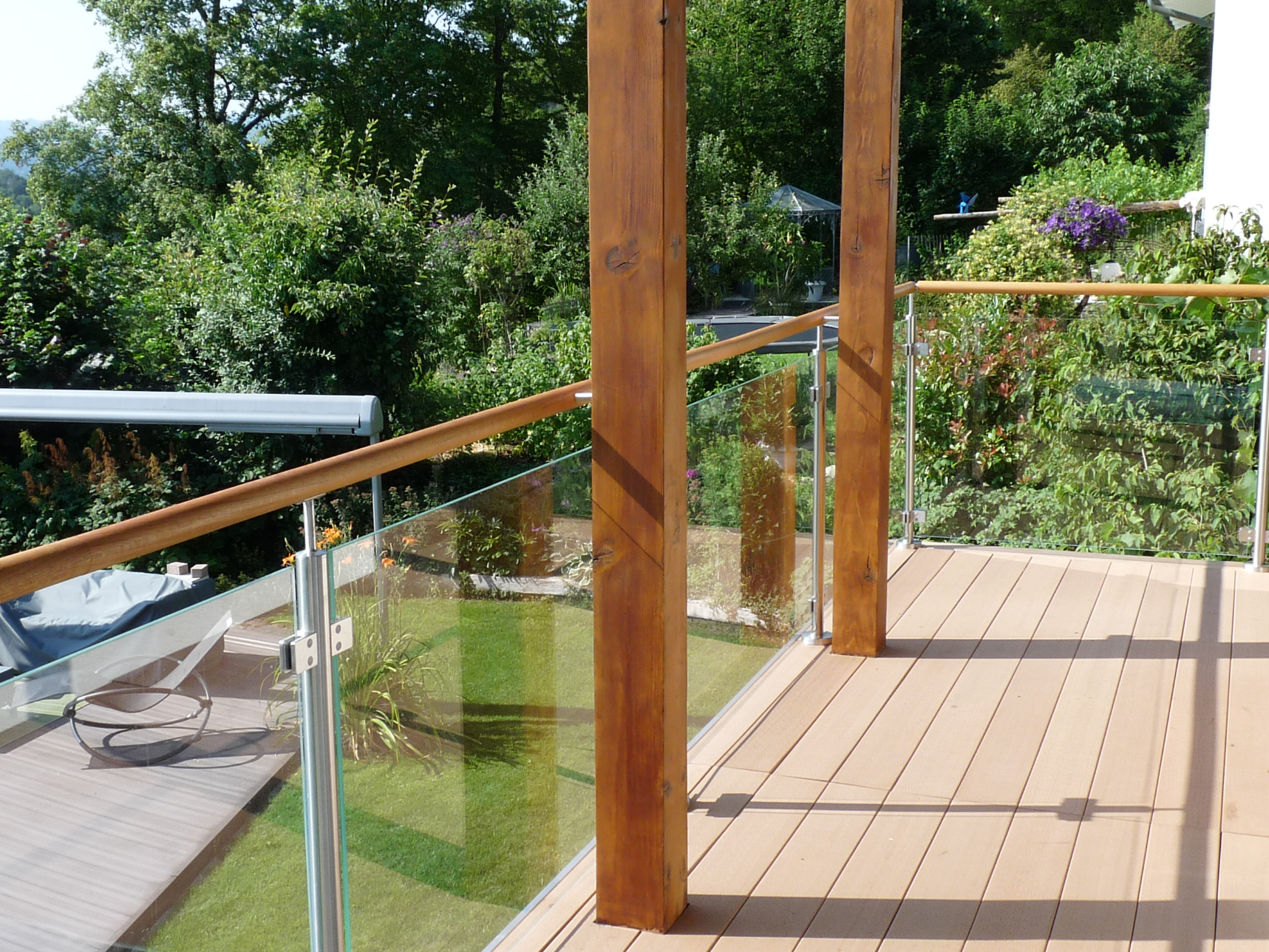
An exterior staircase places higher demands on both the materials and the mounting.
- Coast and Salt Acid-resistant stainless steel, AISI 316
- The more durable option near the coast and in other environments where the handle is exposed to salt.
- Most other situations Painted aluminum
- A lighter material that performs well in normal outdoor environments and is easier to handle during installation.
An exterior staircase can move
The frost heave can cause the stairs to rise and sink to varying degrees, depending on how they are founded. If the handrail is rigidly attached to both the stairs and the house wall, it may need to absorb that movement.
Therefore, it is better to attach the wrist strap to one or the other.
Here's how to do it—step by step
Start by preparing the surface and determining the placement before you drill. Once the mounting, height, and positions of the brackets have been determined, the rest of the installation becomes much easier.
-
Determine the mounting method
Choose whether the handrail should be mounted on a wall, on posts, or on top of an existing railing.
-
Locate the studs
Find out exactly where the load-bearing material is located before installing the brackets. Don't guess based on the surface of the wall.
-
Stretch a string at the desired height
Attach the string at the top and bottom, and walk down the stairs with your hand following the line. This will allow you to check both the height and the slope before drilling the first hole.
-
Measure from the front edge of the step
The height should follow the slope of the stairs and be measured from the front edge of the step—not from the floor.
-
Space the brackets 80–100 cm apart
A uniform console spacing helps the handrail feel stable and reduces the risk of the profile sagging between the mounting points.
-
Pre-drilling in wood
Pre-drilling reduces the risk of the wood splitting when brackets and other hardware are screwed in place.
-
Tie off the ends
Install the end cap or return bend so that the guide has a smooth finish without any sharp edges or parts where something could get caught.
Not sure what kind of mounting your staircase needs?
Send a photo of the staircase and tell us what the wall is made of, and customer service will help you find the right bracket.
Frequently Asked Questions About Installing Handrails
Here are brief answers to the most common questions about height, mounting, cantilever distance, and materials.
How high should the supervisor sit?
The regulations do not specify a height. In practice, it is mounted about 90 centimeters from the front edge of the ladder.
Where do I start measuring from?
From the front edge of the step, along the slope of the staircase. Not from the floor, which is the most common measurement error.
How far apart are the fasteners?
80 to 100 centimeters. At longer distances, the profile sags in the middle.
Can I install it in drywall?
No. The fastener should be driven into a stud, or into a backing board that spans multiple studs.
Are handrails required on both sides?
That's the general rule today. In the past, one page was the starting point; now it's the other way around.
Which material is suitable for outdoor use?
Acid-resistant stainless steel (AISI 316) in coastal areas; painted aluminum in other locations.
Do I need a separate supervisor if I have a handrail?
Rarely. Replace the crossbar with a grip-friendly profile instead.