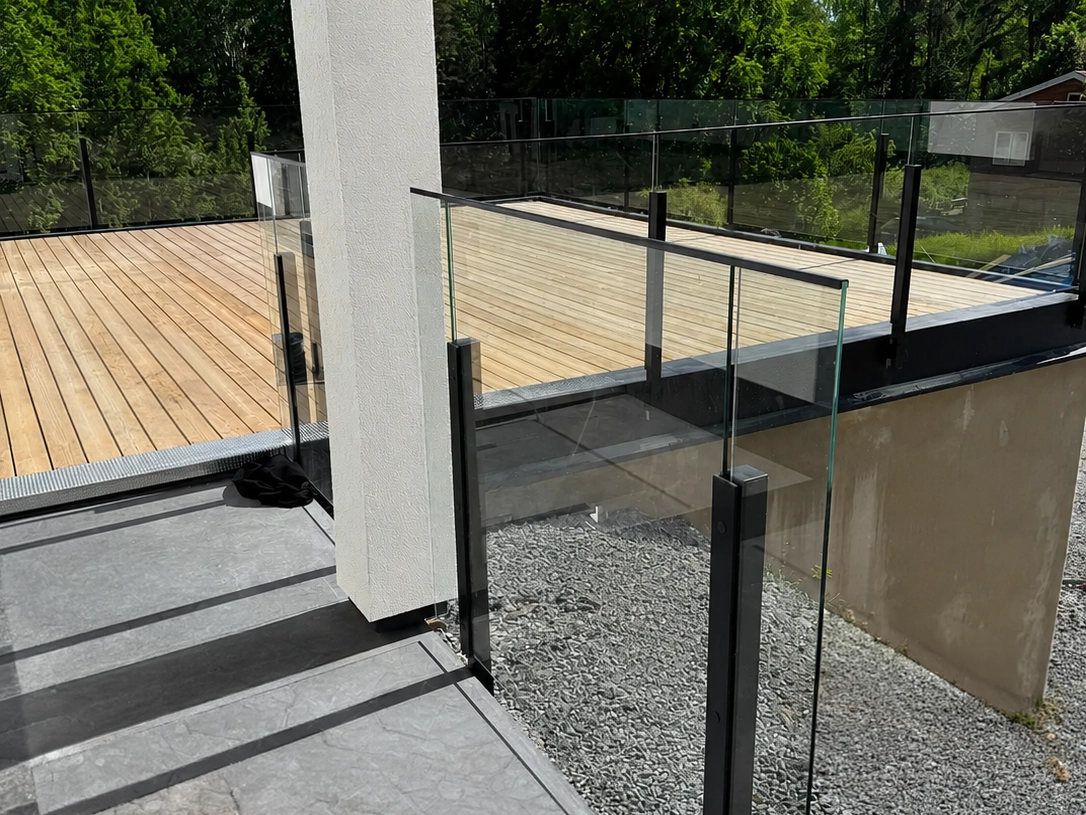
The outdoor staircase is often the first thing a visitor sees of the house, and the slipperiest spot on the property after it has rained.
It differs from an indoor staircase in three ways: the weather, grip in wet conditions, and mounting. All three factors influence which handrail works best.
In this article, we'll go over what to keep in mind when working outdoors, which materials are durable, and where installation tends to go wrong.

What makes an outdoor staircase more difficult than an indoor one?
An outdoor railing must be able to withstand conditions that rarely occur indoors. Weather, grip, and movement in the stair structure all influence both the choice of materials and how the railing should be installed.
| Factor | Outdoors | Indoor |
|---|---|---|
| Slippery Conditions | Rain, Frost, and Ice | Basically never |
| Grip | Wet hands and gloves | Dry hand |
| Materials | Must be resistant to frost, salt, and UV rays | Greater freedom in material selection |
| Mounting | Ground and Structural Movements | Generally stable ground |
| Slope | May become uneven due to settlement | Usually even |
Weather and movement affect the entire railing
Rain, frost, salt, and sunlight place greater demands on the material. At the same time, the ground and the staircase frame may shift over time, which affects the fastenings.
The guide should work even when it's wet
A handle that feels good in dry weather can be difficult to grip with wet hands or mittens. An oval handle made of aluminum or stainless steel provides a more distinct and grippable shape.
What are the rules outdoors?
The same basic safety requirements apply to outdoor stairs as to other stairs inside or adjacent to a building. The railing must protect against falls, and the handrail must provide support when going up or down.
The height and design of fall protection are determined based on the staircase’s use, the drop height, and the risk of injury. Therefore, there is no single minimum dimension that applies to all outdoor staircases. In our article on stair railings we go over the rules in more detail.
The railing must meet the following requirements
- Fall protection must be adapted to the risk. The height, stability, and design must provide adequate protection, taking into account the height of the fall and how the staircase is used.
- Handrails should normally be installed on both sides. A handrail onone sidemay be sufficient when a second handrail is unnecessary due to the staircase's use or design.
- Younger children must not be able to fall through or get stuck. Vertical openings must notexceed 100 millimeters, and the distance between the bottom of the stair railing and the top of the step must not exceed 50 millimeters.
Materials that can withstand the Swedish outdoor climate
The material must be able to withstand repeated exposure to moisture, frost, sunlight, and, at times, salt. When choosing a railing, you should therefore give equal consideration to how exposed the outdoor staircase is and to its appearance.
- AISI 316 Stainless steel
- Acid-resistant quality with high resistance to salt and moisture. A suitable choice for coastal areas and at entrances where road salt may be spread during the winter.
- Maintenance-free Powder-coated aluminum
- Aluminum does not rust, and the powder-coat finish provides a durable color that does not require repainting. It is a common choice for entryway stairs and other high-traffic areas.
- Open design Safety glass with mullions
- Glass maintains visibility while also providing some protection from the wind. It requires regular cleaning but no oiling, painting, or other surface treatment.
- Warm feeling Wood
- Wood has a classic, softer look but needs to be oiled or painted periodically. The wristband wears out the fastest because hands, moisture, and sunlight affect the surface finish.
Be especially careful in environments exposed to salt. Lower-grade stainless steel can develop surface rust and discoloration near the coast or in areas where road salt is used. The stains can also run down and discolor the stairs beneath the railing.
The outdoor staircase is moving, but the house is standing still
A freestanding outdoor staircase mounted on pedestals, pavers, or a gravel bed may settle differently than the building’s foundation. If the railing is rigidly attached to both the staircase and the facade, it may therefore be subjected to forces from two structures that move in different directions.
The staircase is settling
Frost, thawing, and ground movement can cause the staircase to shift over time.
The railing is secured between two frames
The staircase pulls the railing in one direction, while the mounting in the house holds it in place.
The fastener is under load
Posts and fittings may begin to tilt, become loose, or be subjected to uneven loads.
Make sure the railing follows the staircase's design
Avoid locking the rail in both
Generally, let the load-bearing mounting follow the staircase. Where it meets the house, the railing can end without being rigidly anchored to two structures that may move differently.
Measure the slope at several locations
Older staircases may have settled unevenly. Therefore, check the top, middle, and bottom sections before ordering the railing.
Design Choices That Enhance the Entryway
The railing at the entrance is often visible from the street and influences how the entire house is perceived. Choose a style that complements the facade, but always prioritize grip and support.
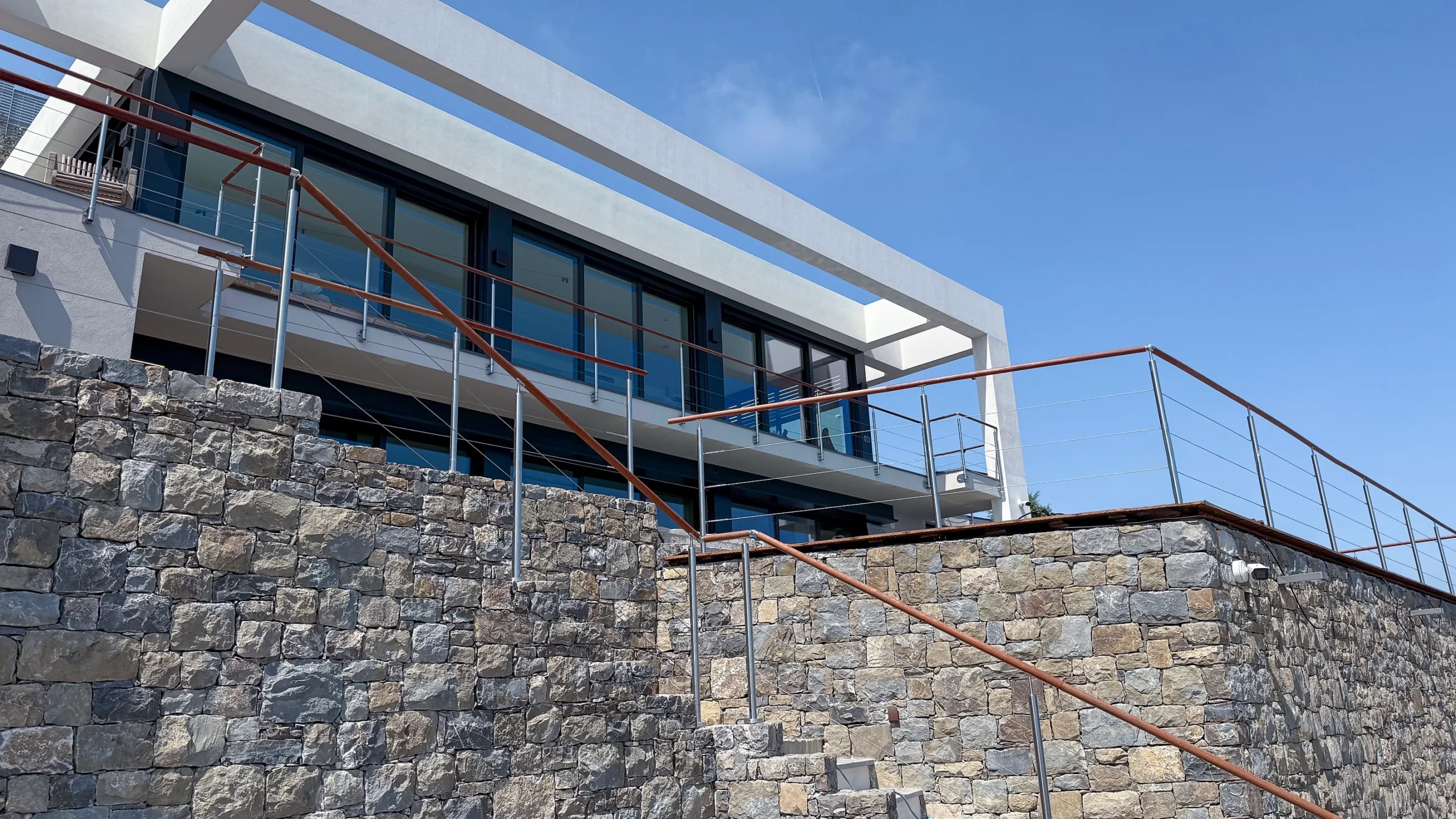
Does anyone in the household need extra support? If so, prioritize a handrail that runs the entire length of the outdoor staircase and is easy to grip, allowing you to follow it all the way without stopping.
Here's how to do it—step by step
Start by considering the staircase's design and exposure before choosing a model and material. This will make it easier to plan a railing that fits the staircase and will hold up over time.
-
Measure the slope at several locations
Check the top, middle, and bottom sections of the staircase. Older staircases may have settled unevenly and therefore need to be measured at more than one point.
-
Check the staircase frame
Determine whether the staircase is cast or made of wood. The fasteners must be sized and positioned based on the load-bearing substrate.
-
Assess how vulnerable the situation is
Check whether the staircase is located near the coast, is exposed to rain and frost, or is exposed to road salt during the winter.
-
Choose materials based on the climate
Base your decision on moisture, salt, and maintenance requirements—not just on appearance. In harsh environments, you need materials that can withstand the stresses over time.
-
Choose a supervisor who is approachable
The handle should be easy to grip even with wet hands or gloves. An oval shape often provides a firm and stable grip.
-
Plan the mounting
Anchor the railing to the staircase's load-bearing structure, and avoid rigidly securing it to both the staircase and the house if the structures are capable of moving independently of one another.
-
Check the anti-slip protection at the same time
The handrail provides support, but does not eliminate the risk of slipping. Therefore, check whether the steps also need anti-slip protection, better drainage, or a surface with a coarser texture.
Not sure which railing is right for your outdoor staircase?
Consider the staircase’s frame, slope, and how exposed the location is. Customer service will help you with measurements, materials, and mounting before you place your order.
Frequently Asked Questions About Railings for Outdoor Stairs
Here you'll find brief answers about materials, handrail height, mounting, and grip for an outdoor staircase.
What is the best material for an outdoor staircase?
Powder-coated aluminum and AISI 316 stainless steel are durable options that require little maintenance. Aluminum does not rust, while AISI 316 offers high resistance to moisture and salt.
Near the coast and at entrances where road salt is spread, AISI 316 is usually the safer choice. The material should always be selected based on how exposed the location is.
What is the required height for a railing on an outdoor staircase?
There is no general minimum dimension that applies to all outdoor staircases. The height, stability, and design of the fall protection must be adapted to the staircase’s intended use, the height of the fall, and the risk of injury.
In areas where young children may be present, vertical openings must not exceed 100 millimeters. The distance between the bottom edge of the stair railing and the nosing of the stair tread must not exceed 50 millimeters.
Where should the railing be attached?
The railing must be anchored to the stairway’s load-bearing structure and not merely to the surface layer. Tiles, paving slabs, and decking boards are not sufficient as the sole mounting surface.
On a wooden staircase, the fasteners must reach load-bearing lumber. On a cast-in-place staircase, the fasteners, edge clearance, and anchoring method must be adapted to the concrete and the load on the railing.
Why is my outdoor railing crooked?
A common cause is that the staircase has settled or shifted differently than the house. This can happen after a freeze, thaw, or movement in the ground and foundation footings.
If the railing is rigidly anchored to both the staircase and the building facade, the fasteners may be subjected to stress when the structures move at different rates.
Which tread pattern provides the best traction in wet conditions?
An oval handle profile is often easy to grip with the hand and can provide a secure grip even with wet hands or gloves. The profile's size, surface texture, and placement also affect how easy it is to use.
The guide should be continuous and designed so that the hand can follow it without unnecessary interruptions.
Can I use wood for my outdoor stairs?
Yes. Wood has a warm, classic look and often feels less cold to the touch than metal during the winter.
However, expect to have to oil or paint it periodically. The handrail usually wears out the fastest because hands, moisture, and sunlight affect the surface finish.