Give your home a fresh look without losing the old charm
Building a balcony on an older house can be a great way to bring in more light, create more space, and add a new area to enjoy in your daily life. At the same time, it’s a project that requires more careful consideration than on a newer house. The balcony should not only be practical, but also blend naturally with the facade, the proportions, and the character of the house.
When the result is truly successful, the balcony almost looks as if it has always been there. To achieve that, you need to carefully consider the construction, building permit, design, and choice of balcony railing right from the start.
Start with the house's construction and conditions
Before you plan a large balcony, you need to find out what is actually possible. Many older houses have wooden or brick frames, and not all structures are built to support the extra load that a new balcony entails. Therefore, it’s wise to consult a structural engineer or engineer early on who can assess the load-bearing capacity and mounting options.
At the same time, it’s not just about technology. On older buildings, additions are often more noticeable than on modern facades, which means that both size and placement play a major role in the overall impression.
It's a good idea to start by thinking about:
- whether the building's structure can support a new balcony
- Where on the facade would the balcony look most natural?
- What size balcony suits the proportions of the house?
- if the project requires the assistance of an engineer or other expert
Building permits for balconies on older homes often require more consideration
In addition to the structural issues, you’ll also need to look into the legal requirements. When you want to build a balcony on an old house, issues related to building permits, facade modifications, and the duty of care often become important early on in the process.
This is especially true if the house is located in an area with older buildings, is subject to a zoning plan, or has cultural and historical significance. In such cases, the municipality often considers not only the balcony itself, but also how well it fits in with the house and its surroundings.
A well-thought-out proposal therefore makes a big difference. If the balcony feels well-balanced from the start, it’s often easier to find a solution that works both practically and aesthetically.
Choose a balcony design that complements the character of the house
When adding an extension to an old house, it’s important for the balcony to blend in with the rest of the structure. Many people therefore draw inspiration from the house’s existing details and adapt the railing, materials, and color scheme to match the existing style.
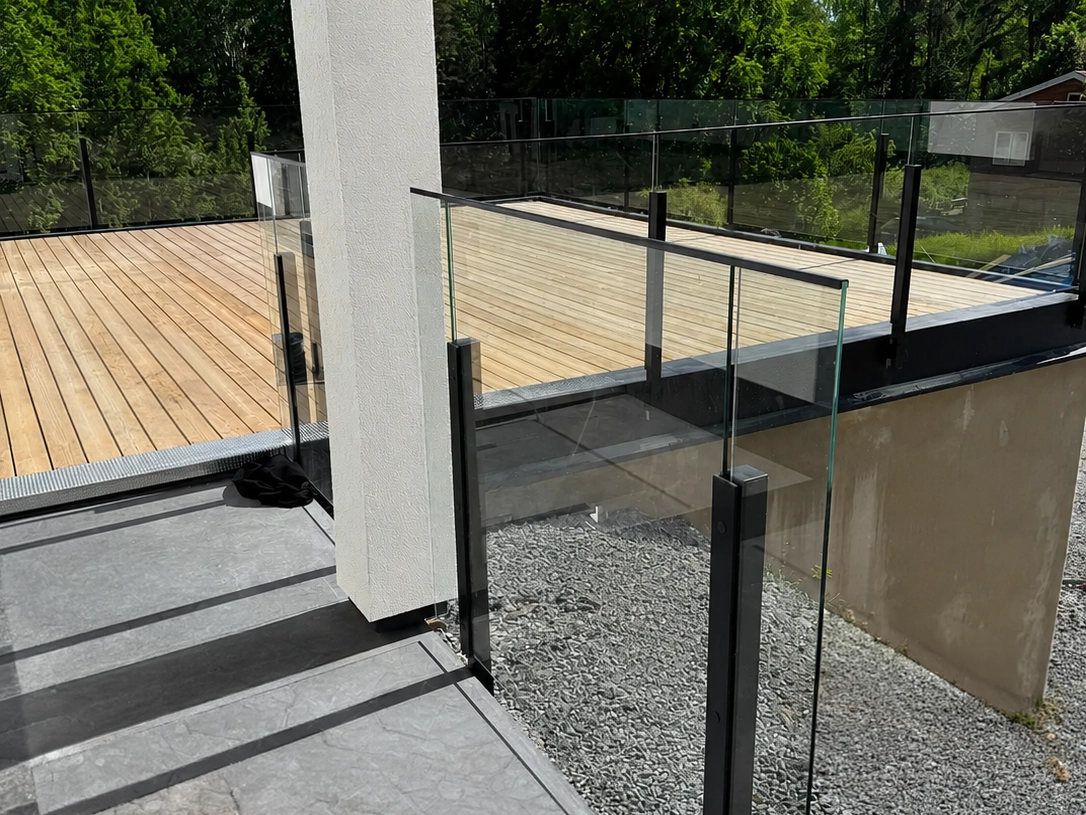
For some older homes, a more classic balcony railing is the best choice. For others, a simpler design might work better. A glass railing, for example, can be a good choice if you want to let in light and give the balcony a lighter feel, while a more traditional railing is sometimes a better fit for maintaining the home’s original character.
It's often the small details that make all the difference:
- the shape and density of the railing
- material and color
- fittings and fasteners
- how the balcony meets the windows and the lines of the facade
A French balcony might be a smarter option
In some cases, a French balcony is a better fit than a cantilevered platform. It’s often a good solution for older houses where a larger balcony would be too heavy, too dominant, or difficult to integrate into the facade.
A French balcony consists of a door or a large window opening with a protective railing on the outside, without an actual balcony floor. It doesn’t provide the same sense of an outdoor space as a larger balcony, but it lets in more light, offers greater connection to the outdoors, and is often a more considerate solution for older buildings.
For many homes, that is precisely why the French balcony is the most natural choice.
Think about how the balcony will be used
A balcony is at its best when it’s designed with everyday life in mind. Should it be a small spot for morning coffee and evening sun, or does it need to accommodate a dining table, plants, and perhaps even some privacy or wind protection?
The intended use affects the size, materials, and the type of balcony railing that works best. The more clearly you think through the function from the start, the easier it will be to create a solution that will actually be used.
Some practical questions to consider are:
- how many people it can accommodate
- if you need privacy screening or wind protection
- which material requires the least maintenance
- if lighting or electrical outlets were available
The right balcony railing makes a big difference in both style and function
An important decision when building a balcony is which railing to use. It must, of course, meet safety requirements, but it should also complement the home’s aesthetic. On an older home, the railing often becomes a prominent feature of the facade, which makes the choice especially important.
A classic railing can enhance a traditional look, while a glass railing can create a lighter feel and preserve more of the view. In some cases, a more solid railing may be the right choice if you want more privacy and a cozier atmosphere.
Whether you’re planning a large balcony or a French balcony, the right balcony railing can make a big difference in both appearance and function. At Balustrade Store , you’ll find solutions that can be adapted to both older and newer homes, with a focus on making the balcony feel like a natural part of the whole.